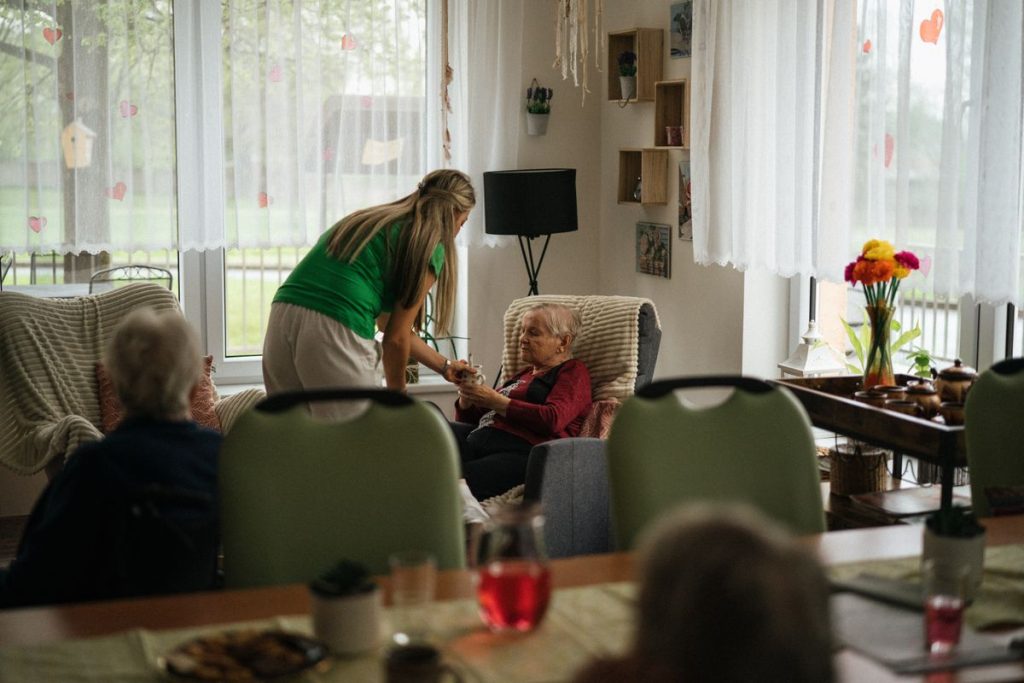
The clearest signs a parent with dementia needs more support are long stretches alone without anything to do, rising anxiety or late-day restlessness, new safety slips, a shrinking social world, and a family caregiver who is running on empty. If you see two or three of these, it is time to add help before a crisis forces the decision.
This guide is for adult children whose parent already has a diagnosis and some help, often from a spouse or one sibling, and who sense the current arrangement is no longer enough. It walks through seven signs, what each one usually means, a ladder of support options from light to intensive, and an example of how a Florida family might respond.
Table of contents
Why the signs are easy to miss
Dementia changes slowly, and families adapt without noticing. A daughter starts calling twice a day instead of once. A father’s friends stop visiting. A mother’s afternoons get harder, and everyone simply plans around them. Each adjustment feels small. Together they can add up to a parent who needs far more than the family is providing.
The Alzheimer’s Association notes that the middle stage is typically the longest and can last many years, and that people in this stage need more care as they become more confused, restless or forgetful. That long middle stretch is where most families find themselves wondering if it is time.
7 signs a parent with dementia needs more support
1. Long hours alone with nothing to do
If your parent spends most of the day in front of the television, without conversation or anything purposeful, that is a sign. Boredom and isolation can feed low mood, restlessness and agitation. People with dementia often cannot start an activity on their own, even one they love, but they can enjoy it when someone sets it up and joins in.
What helps: regular company built around their interests, such as music, a walk, cooking or old photos. Our list of meaningful activities at home is a good starting point.
2. More anxiety, pacing or late-day restlessness
Many people with dementia become more anxious, restless or confused in the late afternoon and evening, a pattern often called sundowning. If your parent is pacing, asking to “go home” while at home, or getting upset at the same time each day, the current routine may not be meeting their needs.
What helps: a calm, predictable afternoon with a familiar person present. See our guide to managing sundowning.
3. You or your sibling are burning out
If the main caregiver is exhausted, irritable, skipping their own doctor visits or feeling hopeless, the arrangement is not sustainable. Mayo Clinic notes that long-term caregiver stress can lead to depression, anxiety and poor sleep and raise the risk of problems such as heart disease. A burned-out caregiver is also more likely to miss early warning signs in your parent.
What helps: scheduled respite, not occasional favors. Our guide to recognizing and recovering from caregiver burnout explains how to start.

4. New safety slips
Leaving the stove on, missed or doubled medications, unlocked doors at night, unpaid bills, scam calls, or getting lost on a familiar drive are all safety flags. So is getting outside alone and not finding the way back. The Alzheimer’s Association reports that six in ten people with dementia will wander at least once.
What helps: more eyes on the day, medication reminders, simple home changes and a wandering plan. Florida heat adds risk: a parent who wanders or forgets to drink on a summer afternoon can become dehydrated quickly.
5. A shrinking social world
Driving stops. Friends drift away. Church, the club or the card game falls off the calendar. For someone with dementia, this loss of connection can deepen withdrawal and low mood.
What helps: someone to take your parent to the places and people that still bring joy, or to bring those things home.
6. You live too far away to see what is happening
Long-distance children often learn about problems late: weight loss, spoiled food in the fridge, a fall that nobody mentioned. Phone calls can hide a lot, because many people with dementia are good at sounding fine for ten minutes.
What helps: a reliable local person who sees your parent regularly and sends you notes. Our page for long-distance families covers how to set that up.
7. The same person carries everything
In many families, one spouse or sibling does almost all of the hands-on care. Even when they say they are fine, a single caregiver is a single point of failure. If that person gets sick, has surgery or simply cannot continue, your parent’s care collapses overnight.
What helps: a shared plan with backup. Our post on talking to siblings about dementia care can help you divide the load fairly.
Florida factors that raise the stakes
Some features of life in Florida can turn a small gap in support into a serious problem faster than families expect.
- Heat. Summer afternoons are dangerous for an older adult who forgets to drink, wanders outside or turns off the air conditioning to save money. A parent who used to manage the thermostat may no longer notice when the house is too hot.
- Hurricane season. From June through November, someone has to watch the forecasts, gather medications and supplies, and decide early whether to evacuate. A parent with dementia cannot carry that plan alone, and a stressed spouse may struggle to.
- Distances and driving. Many retirees live far from family and depend on a car. Once driving stops, getting to the doctor, the pharmacy or church can become impossible without a plan.
- Language. Some parents return to their first language as dementia progresses. A helper who speaks Spanish, Creole or another familiar language can make support feel far less foreign.
If any of these apply to your parent, treat them as an extra reason to act on the signs above sooner rather than later.
What each sign usually calls for
Use this table to match what you are seeing with a likely next step. Many families need a combination.
| Sign | Likely need | Common first step |
|---|---|---|
| Alone and unoccupied | Engagement and company | Two or three companion visits a week |
| Late-day anxiety | Calm structure in the afternoon | Visits timed for 2pm to 6pm |
| Caregiver burnout | Respite | Fixed weekly blocks of time off |
| Safety slips | Supervision and reminders | Daily check-ins, home safety changes, a doctor review |
| Shrinking social world | Outings and connection | A companion who drives to church, lunch or the park |
| Distance | Local eyes and reports | Regular visits with written notes |
| One caregiver carrying all | Backup and shared load | Family plan plus paid help on set days |
A ladder of support, from light to intensive
More support does not have to mean a move. Think of it as a ladder you can climb one rung at a time.
- Family adjustments: a shared calendar, siblings taking set days, simple home safety changes.
- Companion visits: a few hours, two or three times a week, for engagement, meals, outings and the caregiver’s breaks.
- Adult day programs: structured group days with activities and meals.
- Daily in-home help: longer visits most days, often covering the hardest hours.
- Combined care: companions alongside home health, hospice or a nurse for medical needs.
- Residential memory care: when supervision is needed around the clock.
Our guide for parents living alone with dementia explains how far each rung can stretch when there is no one else in the house.
Example: a father in Fort Myers
This is an illustrative example, not a real family. A 77-year-old retired mechanic in Cape Coral has moderate vascular dementia. His wife, 74, is his only caregiver. Their daughter lives in Atlanta.
Over the summer, the daughter notices on video calls that her mother looks worn out. Her father has stopped going to his Thursday coffee group, and her mother mentions he has twice tried to “go to work” at dusk. That is three signs: burnout, a shrinking social world and late-day restlessness.
The family starts with a companion three afternoons a week, 2pm to 6pm. The companion takes him to his coffee group on Thursdays and tinkers with model engines with him on the other days. His wife uses the time for her own appointments and a nap. The daughter reads the visit notes each evening. Three months later, they add a fourth afternoon during hurricane season, when her mother is busy with storm preparations.
How to raise the subject with your parent
Many parents resist the idea of “help.” It often goes better when you frame support as something for the caregiver (“Mom needs a break on Tuesdays”) or as companionship around an interest (“someone who also loves fishing”). Keep the conversation short, choose a calm time of day, and involve your parent in small choices, such as which days or which person.
If your parent cannot recognize their own memory problems, logical arguments will not land. Focus on the benefit they can feel: company, outings, favorite foods, less worry for the family.
When to call the doctor
Some signs are medical, not just a need for more help. Call your parent’s doctor if you notice sudden worsening of confusion over hours or days, new falls, weight loss, not eating or drinking, new hallucinations, or a big change in sleep. Sudden changes can come from infections, dehydration or medication side effects, which are treatable. Bring a list of what you have observed; our dementia stage checker can help you organize it.
Watch a caregiver before you choose
Families watch video interviews like these and choose their companion. No one is sent to your parent's home until you have watched them and said yes.



Frequently asked questions
How do I know if my parent’s needs are normal progression or something new?
Gradual change over months is typical of dementia. Sudden change over hours or days is not, and needs a doctor’s attention. Keep a simple log of sleep, appetite, mood and incidents so you can show the doctor a pattern rather than a single bad day.
My parent says they are fine. Should I still add support?
Often, yes. Many people with dementia do not recognize their own limitations. Rely on what you and others observe, such as missed meals, unpaid bills or getting lost, rather than on how your parent rates themselves. Introduce help gently and around their interests.
How much help do most families start with?
Many start with two or three visits a week of three to four hours, timed for the hardest part of the day or the main caregiver’s busiest time. Our rate is $35/hour for 40+ hours a week; call us about shorter schedules. Hours can rise as needs change.
What if my parent lives with my other parent?
A spouse at home is a big help, but older spouses often have health problems of their own and may hide how tired they are. Watch the healthy parent as closely as the one with dementia. Support aimed at the spouse, such as respite and help with errands, often keeps both parents safer at home.
Is more support at home cheaper than memory care?
Part-time help at home usually costs less than memory care. Once a parent needs supervision around the clock, costs can be similar or higher at home. Our Florida dementia care cost guide compares options.
Still have questions?
Talk it through with us. A free call about your family's situation, with no obligation.
Call (689) 333-6079Send us a message- Screened for dementia care experience
- Florida ADRD training before the first visit
Conclusion
The signs a parent with dementia needs more support usually arrive quietly: long empty days, late-day anxiety, safety slips, fewer friends, a worn-out caregiver, and family members who are too far away or too few.
You do not have to jump to the top of the support ladder. Add help one step at a time, aimed at the specific signs you see, and review it every few months.
If your parent would benefit from a consistent companion, get 3 free caregiver profiles within 48 hours or call (689) 333-6079. Our memory and engagement visits are built around the things your parent still loves.
Want a companion screened for dementia care experience?
We'll send 3-5 caregiver video profiles within 48 hours, so you can watch their video interviews before you decide. $35/hour for 40+ hours a week, no contracts.