Caregiver burnout is the deep physical, emotional and mental exhaustion that builds when you care for someone with dementia for months or years without enough rest or help. It usually creeps in slowly. The most reliable fixes are regular, planned breaks, practical help with the daily load, and support for your own health.
This guide explains how to recognize dementia caregiver burnout early, why dementia care wears people down so thoroughly, and a step-by-step recovery plan that Florida families can start this week, including local programs, a sample weekly schedule and when to call a doctor for yourself.
Table of contents
What caregiver burnout looks like
Burnout is more than being tired after a hard day. A good night’s sleep fixes ordinary tiredness. Burnout stays even after rest, and it slowly changes how you feel about yourself, your loved one and your life.
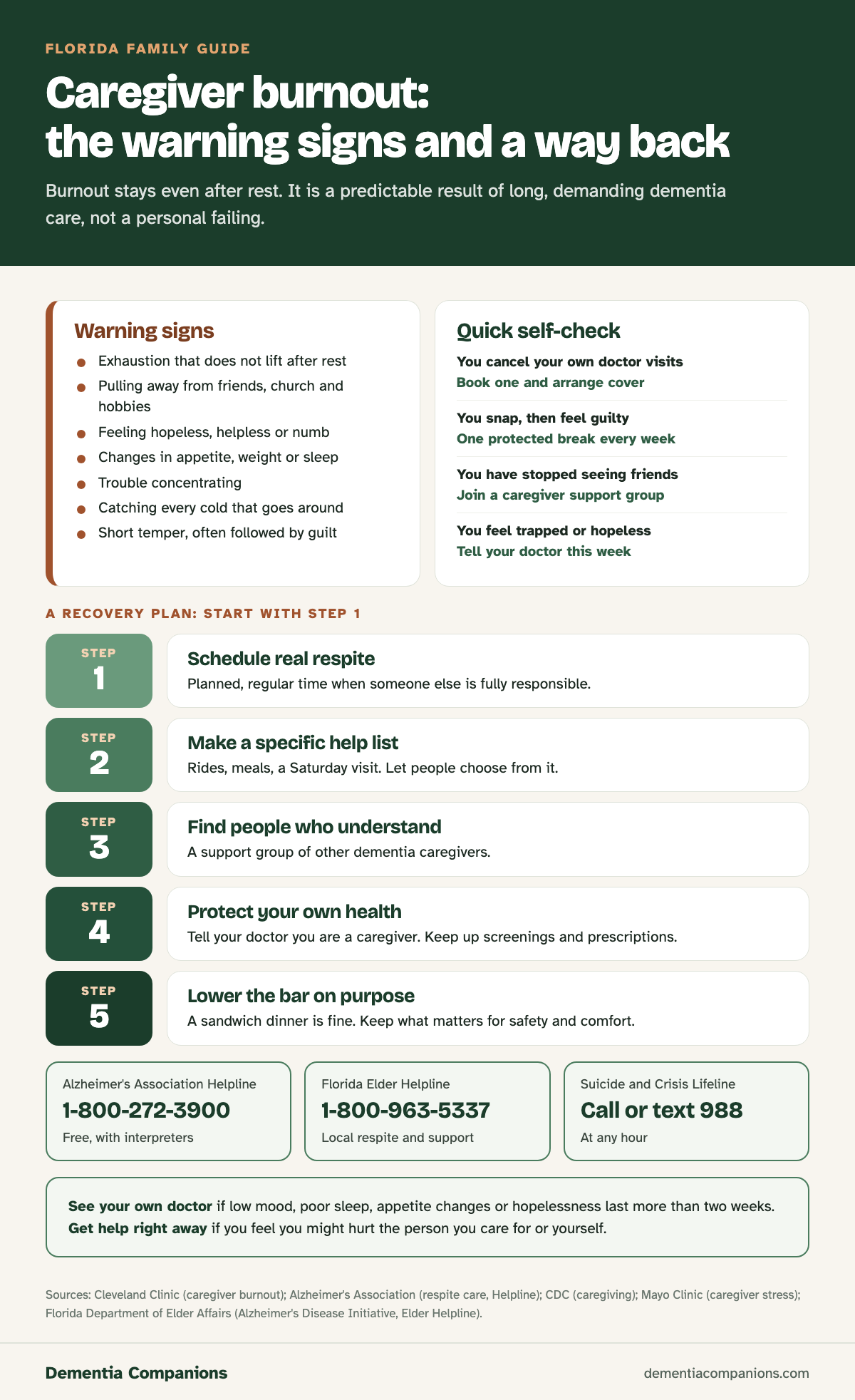
The Cleveland Clinic describes caregiver burnout as exhaustion that can affect your health, finances and relationships. Common signs include:
- Exhaustion that does not lift after rest or a day off
- Pulling away from friends, church, hobbies or family you used to enjoy
- Feeling hopeless, helpless or numb
- Changes in appetite, weight or sleep
- Trouble concentrating or remembering your own appointments
- Catching every cold that goes around
- Irritability, short temper or flashes of anger, often followed by guilt
Many caregivers also notice resentment toward the person they love. That feeling is common and does not make you a bad person. It is a signal that the load has become too heavy for one person.
Stress, burnout and compassion fatigue
Stress comes and goes with hard days. Burnout is what happens when the stress never lets up. Compassion fatigue is related but different: it describes absorbing another person’s distress until it becomes hard to feel empathy at all. You can have more than one at the same time.

Why dementia caregiving leads to burnout
Dementia care has features that make it harder to sustain than many other caregiving roles. Knowing them helps you stop blaming yourself.
- It lasts a long time. According to the CDC, dementia caregivers often provide care for longer than people caring for other conditions, and they face a higher risk of anxiety and depression.
- It is unpredictable. A calm morning can turn into an anxious, sundowning evening with no warning.
- It involves grief while the person is still here. You may be mourning the relationship you had while caring for the person in front of you.
- It is invisible. Friends see your loved one on a good day and may not understand what the nights are like.
- The person may not be able to thank you. Dementia can take away the ability to notice or appreciate what you do.
Cleveland Clinic also points to role confusion (am I a daughter or a nurse?), unrealistic expectations, and simply not recognizing burnout as it builds. Mayo Clinic notes that long-term caregiver stress can lead to depression, anxiety, poor sleep and inactivity, which raise the risk of problems such as heart disease and diabetes.
Caregiver burnout warning signs and what to do
Use this table as a quick self-check. If you recognize yourself in several rows, treat it as a reason to act now rather than a reason to push harder. Our two-minute caregiver burnout check can help you take stock.
| What you notice | What it may mean | A first step |
|---|---|---|
| You cancel your own doctor visits | Your health has dropped to the bottom of the list | Book one appointment and arrange cover for that morning |
| You snap, then feel guilty | Your patience reserve is empty | Schedule at least one protected break every week |
| You have stopped seeing friends | Isolation is setting in | Join a caregiver support group, in person or online |
| You sleep badly or too much | Stress is affecting your body | Talk to your doctor; ask about sleep and mood |
| You feel trapped or hopeless | Possible depression | Tell your doctor this week; depression is treatable |
| You fear you might hurt your loved one | Crisis point | Get help today from a doctor, social worker or trusted person |
A recovery plan that works
There is no single cure for burnout, but the pieces below work best together. Start with the first step and add the others over the next few weeks.
Step 1: Schedule real respite, not stolen minutes
The most effective step is planned, reliable time off when someone else is fully responsible for your loved one. Grabbing an hour while a neighbor “keeps an eye” rarely restores you. Real respite is predictable, so you can plan around it and actually rest.
The Alzheimer’s Association describes three kinds of respite: in-home help, adult day centers, and short stays in a care community. A consistent companion on a fixed weekly schedule is one option; our dementia respite care page explains how that works. For a fuller look at the options and the guilt that often comes with them, read our guide to respite care without the guilt.
Step 2: Make a specific help list
People often say “let me know if you need anything” and then never hear back. Turn vague offers into real help by keeping a written list: a ride to the cardiologist, a casserole on Thursdays, a Saturday morning visit, picking up prescriptions. When someone offers, let them choose from the list.
If siblings are not pulling their weight, a structured family conversation helps. Our post on talking to siblings about dementia care has scripts you can use.
Step 3: Find people who understand
Talking with other dementia caregivers is different from talking with friends who mean well but have not lived it. The Alzheimer’s Association runs a free Helpline at 1-800-272-3900, with interpreters for many languages, and can connect you with support groups near you.
Step 4: Protect your own health
Tell your own doctor that you are a caregiver. Keep up with your screenings, vaccines and prescriptions. Short walks, regular meals and water count. Mayo Clinic also notes that eligible employees may take up to 12 weeks of unpaid leave a year under the federal Family and Medical Leave Act, so ask your human resources office what applies to you.
Step 5: Lower the bar on purpose
A sandwich dinner, an unvacuumed floor or a skipped outing is fine. Decide which tasks truly matter for your loved one’s safety and comfort, and give yourself permission to let the rest slide.
Florida help for exhausted caregivers
Florida has public programs built for this situation. The state’s Alzheimer’s Disease Initiative, run by the Department of Elder Affairs, funds respite (in-home, facility-based, emergency and extended stays of up to 30 days), caregiver training, counseling and support groups. These services are reached through your local Area Agency on Aging, and waitlists are common, so call early.
The statewide Elder Helpline, 1-800-963-5337, can point you to your local Aging and Disability Resource Center. Our Florida dementia resources page lists each region’s agency and Memory Disorder Clinic.
Example: a burnout recovery week
This is an illustrative example, not a real family. Imagine a 72-year-old wife in Sarasota caring for her husband, who has middle-stage Alzheimer’s. She has not seen her own doctor in a year and has stopped going to her book club.
| Day | What changes |
|---|---|
| Monday | A companion visits 9am to 1pm. She goes to her overdue checkup and has lunch with a friend. |
| Tuesday | She calls the Alzheimer’s Association Helpline and signs up for a support group. |
| Wednesday | Her son takes the afternoon shift by video call and a short visit, as agreed in a family meeting. |
| Thursday | Companion visit 9am to 1pm. She naps, then walks for 20 minutes. |
| Saturday | Book club returns, with a neighbor sitting with her husband for two hours. |
Nothing about the illness has changed, but she now has eight protected hours a week and people who know what she is going through. That is often where recovery starts. Spouses carry a particular load; our page for spouse caregivers covers it in more depth.
When to call a doctor for yourself
Burnout can turn into depression or anxiety, which are medical conditions and treatable. Make an appointment with your own doctor if low mood, poor sleep, appetite changes or hopelessness last more than two weeks.
Get help right away if you feel you might hurt the person you care for or yourself. You can call or text 988, the Suicide and Crisis Lifeline, at any hour. Reaching out at that point is the responsible, loving thing to do.
Frequently asked questions
How long does it take to recover from dementia caregiver burnout?
It varies. Many caregivers feel some relief within a few weeks of getting regular breaks and support, but deeper exhaustion can take months to lift, especially while caregiving continues. Recovery is less about one long vacation and more about a sustainable weekly rhythm. If symptoms of depression persist, talk to your doctor.
Is it normal to feel resentment toward a parent or spouse with dementia?
Yes. Resentment, frustration and guilt are very common among dementia caregivers. They usually mean you are carrying too much alone, not that you love the person less. Treat the feeling as a signal to get more help. If resentment turns into fear that you could hurt them, seek help immediately.
How much respite do caregivers need?
There is no official number. Many families start with one or two predictable blocks a week, such as two four-hour visits, and adjust from there. What matters most is that the time is regular and that someone else is fully responsible, so you can rest rather than run errands at a sprint.
Does Medicare pay for respite for caregivers?
Medicare covers short inpatient respite stays only for people enrolled in hospice. It does not pay for ongoing companion or in-home respite care. Florida’s Alzheimer’s Disease Initiative and Medicaid long-term care may help eligible families; see our paying for dementia care overview.
Can a companion help if my loved one refuses outside help?
Often, yes. Many families introduce a companion as a friend, helper or someone who shares an interest, and keep early visits short and relaxed. A consistent person who returns at the same times each week tends to become familiar. It can take a few weeks.
Still have questions?
Talk it through with us. A free call about your family's situation, with no obligation.
Call (689) 333-6079Send us a message- Screened for dementia care experience
- Florida ADRD training before the first visit
Conclusion
Caregiver burnout is a predictable result of long, demanding dementia care, not a personal failing. The warning signs are exhaustion that rest does not fix, withdrawal, irritability and hopelessness.
Recovery starts with planned respite, specific help from others, people who understand, and attention to your own health. Florida programs and private help can work side by side.
If you need a regular break, get 3 free caregiver profiles within 48 hours or call (689) 333-6079. A consistent companion through our dementia companion care service costs $35 an hour for 40+ hours a week, with no long-term contract.
Want a companion screened for dementia care experience?
We'll send 3-5 caregiver video profiles within 48 hours, so you can watch their video interviews before you decide. $35/hour for 40+ hours a week, no contracts.