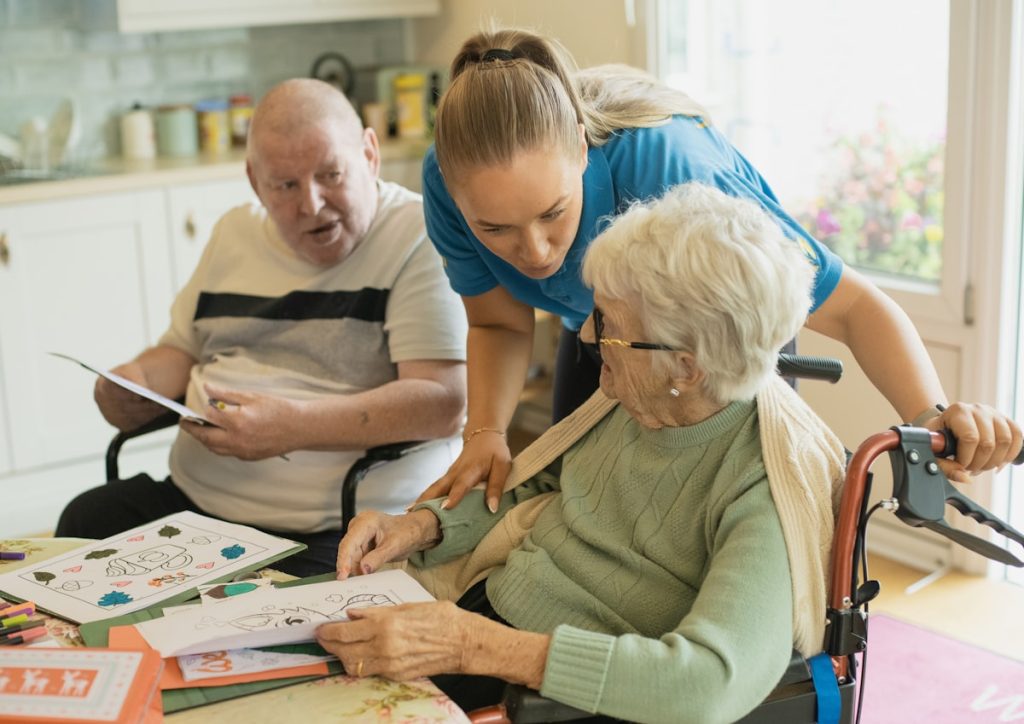
The best activities for dementia patients at home build on what your loved one has always enjoyed and can still do: music, photos, simple chores, gardening, cooking, art, walks, and conversation. Match each activity to their current abilities, focus on enjoyment rather than results, and stop or switch when attention fades. Meaningful activities can lift mood and ease restlessness.
This guide offers ten tested ideas, how to adapt them by stage, a planning table, and an example day. Each idea works in a Florida home, with notes on heat and outdoor time.
Table of contents
How to choose meaningful activities
The Alzheimer’s Association recommends planning activities around lifelong skills and interests, breaking tasks into simple steps, and choosing the time of day when your loved one is most alert. A former office worker might enjoy sorting coins; a former gardener might enjoy yard work.
- Think about who they are. Career, hobbies, faith, music, and family roles.
- Match abilities, not age. Adjust for vision, hearing, energy, and movement.
- Do the hard part yourself. You measure; they stir.
- Value the process. Towels folded “wrong” still count.
- Do not force it. Try again later or try something else.
Our dementia activities hub has printable ideas sorted by stage.
10 activities for dementia patients at home
These ideas need little equipment and work across many stages.
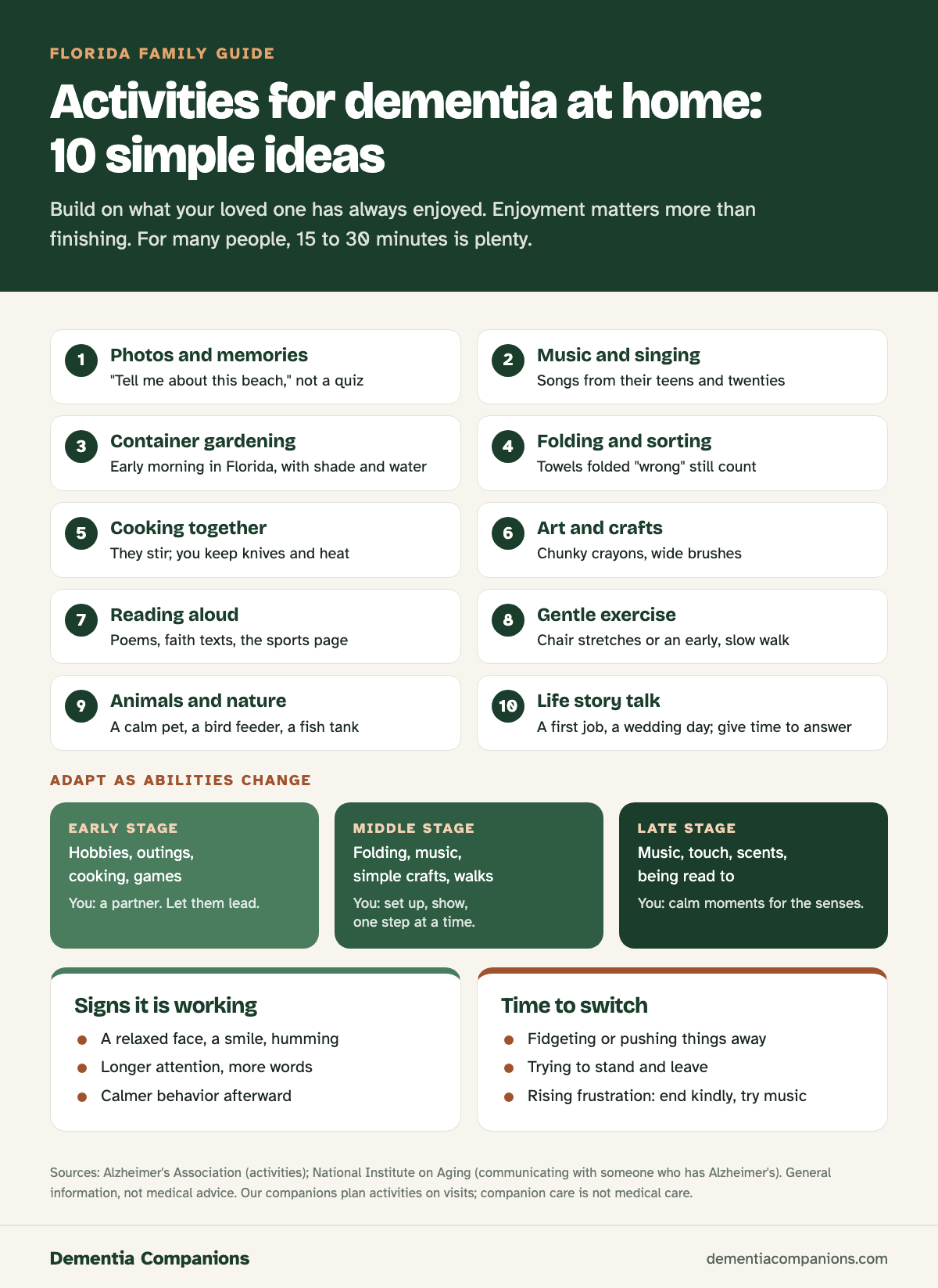
1. Photo albums and reminiscence
Older memories often last longer than recent ones. Look through photos, postcards, or a “memory box” of meaningful objects. Use invitations rather than quizzes: “Tell me about this beach” rather than “Do you remember who this is?”
2. Music and singing
Familiar songs from your loved one’s teens and twenties can spark smiles, singing, and movement, even when conversation is hard. Build a playlist and use it during meals, bathing, or restless afternoons. See our guide to music and dementia.
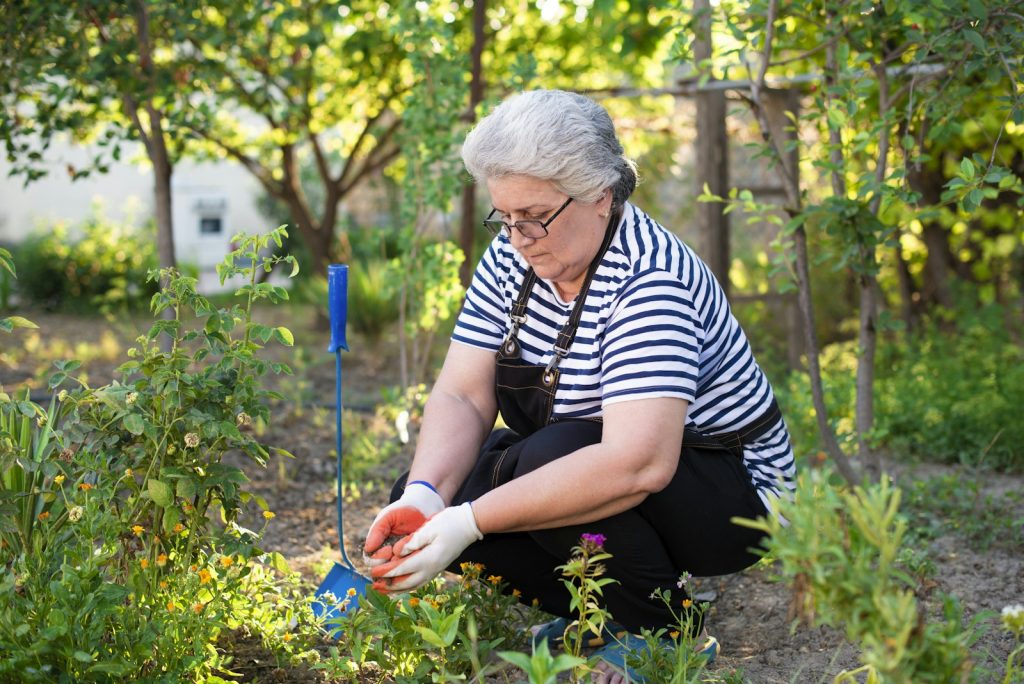
3. Container gardening
Watering herbs, repotting a plant, or deadheading flowers gives a sense of purpose. In Florida, garden in the early morning, use shade, and bring water.
4. Folding and sorting
Folding towels, pairing socks, or sorting buttons by color uses skills that often last well into the middle stage. If the towels need refolding later, that is fine.
5. Cooking and baking together
Stirring batter, washing vegetables, or shaping cookies brings back familiar smells and routines. Keep knives and hot surfaces in your hands.
6. Art and crafts
Watercolor, coloring, clay, or simple collages allow expression without words. Choose chunky crayons and wide brushes. Display the results proudly.
7. Reading aloud
Short poems, faith texts, favorite magazines, or the sports page read aloud can be calming. Choose emotionally safe material.
8. Gentle exercise
Chair exercises, stretching, or a slow walk support sleep and reduce restlessness. In Florida, walk early or in an air-conditioned mall, with good shoes and water.
9. Animals and nature
Stroking a calm family pet, watching birds at a feeder, or sitting by a fish tank can be soothing. Some families use a soft plush animal if a real pet is not practical.
10. Life-story conversation
Ask about a first job, a wedding day, or a favorite recipe. Record the stories for the family. This honors who your loved one is, and the National Institute on Aging recommends giving extra time to respond and not interrupting.
Adapting activities by stage
As dementia changes, so should the activities. Use this table as a starting point.
| Stage | What works | Your role |
|---|---|---|
| Early | Hobbies, outings, cooking, games | Partner; let them lead |
| Middle | Folding, music, simple crafts, walks | Set up, break into steps, demonstrate |
| Late | Music, touch, scents, being read to | Provide calm sensory moments |
The Alzheimer’s Association notes that, later on, people often take a less active role, and simple repeated tasks can still give structure and purpose.
Signs an activity is working
You do not need a finished craft to know an activity helped. Look for a relaxed face, a smile, humming along, longer attention, more words than usual, or calmer behavior afterward. Those are wins.
Signs it is not working include fidgeting, pushing materials away, repeated attempts to stand and leave, or rising frustration. When you see them, end on a positive note (“Thank you, that was a big help”) and switch to something easier, like music or a snack. Jot a quick note so you remember next time which activity suited which time of day. Over a few weeks, these notes turn into a reliable menu of what your loved one enjoys.
Build a simple activity kit
Having supplies in one basket makes it easy for anyone, from a spouse to a visiting grandchild, to start an activity in seconds.
- A small photo album with names written on the back
- A playlist or radio station of favorite songs
- Washcloths or towels to fold, and a jar of mixed buttons to sort
- Large-print word searches, chunky crayons, and a coloring book for adults
- A soft blanket, scented hand lotion, and a smooth stone or textured fabric
Rotate items every few weeks so the kit stays interesting.
Involving visitors and grandchildren
Visits often go better with a shared activity than with a long conversation. Grandchildren can play a simple card game, show photos on a tablet, sing, or help with a puzzle. Give visitors a short tip sheet: introduce yourself, keep questions simple, and do not quiz. A single meaningful activity done together can turn an awkward visit into a warm one.
Getting out of the house
Home is not the only setting. Many Florida communities offer accessible parks, libraries, places of worship, and adult day programs with music and exercise. Short, quiet outings at familiar places tend to work best, ideally in the morning. Our guide to adult day programs in Florida explains what to look for.
Using activities to ease hard moments
Activities are also a gentle tool for restlessness. The Alzheimer’s Association suggests redirecting behaviors into tasks: someone who rubs the table can be handed a cloth to wipe it; someone tapping their feet may enjoy music. A late-afternoon activity can help with sundowning.
Example: a gentle day at home
This is an illustrative example, not a real client. A daughter in Delray Beach plans a day for her mother, who loved her garden and big-band music.
- 8:30 a.m. Watering potted herbs on the patio before the heat.
- 10:00 a.m. Folding warm towels while the radio plays.
- Noon. Making sandwiches together for lunch.
- 2:00 p.m. Photo album and stories about the old neighborhood.
- 4:00 p.m. A short walk and a favorite playlist.
Not every activity lands. When her mother loses interest, she switches without fuss. A daily routine planner helps her keep track of what works.
A note on safety and health
Watch for signs that an activity is too much: frustration, fatigue, or anxiety. Stop and offer something simpler. Keep tools, chemicals, and hot surfaces supervised, and plan outdoor time for cooler hours. If your loved one suddenly loses interest in everything, sleeps much more, or seems newly confused, talk to their doctor, since depression, pain, infection, or medicines can be involved. This article is general information, not medical advice.
Frequently asked questions
What activities are good for dementia patients at home?
Music, photo albums, folding laundry, simple cooking, gardening, art, gentle exercise, and conversation about their life all work well. Choose based on their past interests and current abilities.
How long should an activity last?
As long as your loved one is enjoying it. For many people that is 15 to 30 minutes. Stop before frustration builds.
What if my loved one refuses every activity?
Do not force it. Try a different time of day, a simpler version, or just start the activity yourself and invite them to join. Sudden loss of interest is worth mentioning to the doctor.
Are there activities for late-stage dementia?
Yes. Gentle hand massage with lotion, familiar music, soft fabrics, pleasant scents, and being read to all offer comfort. Your calm presence is itself meaningful.
Can a companion lead activities?
Yes. Our companions plan music, reminiscence, walks, and crafts tailored to your loved one, and note what worked after each visit.
Still have questions?
Talk it through with us. A free call about your family's situation, with no obligation.
Call (689) 333-6079Send us a message- Screened for dementia care experience
- Florida ADRD training before the first visit
Conclusion
The best activities for dementia patients at home are simple, familiar, and built around who your loved one has always been. Enjoyment matters more than finishing.
Adapt as abilities change, use activities to ease restless moments, and keep a note of what works. Small, familiar moments repeated every day often matter more than any special outing.
If you would like help filling the day with meaningful moments, get 3 free caregiver profiles within 48 hours or call (689) 333-6079. Explore our memory and engagement visits at $35 an hour for 40+ hours a week.
Want a companion screened for dementia care experience?
We'll send 3-5 caregiver video profiles within 48 hours, so you can watch their video interviews before you decide. $35/hour for 40+ hours a week, no contracts.