What does a dementia companion do? A dementia companion spends time with your loved one at home, offering conversation, activities, walks, meals, light housekeeping, errands, and medication reminders, while keeping a gentle eye on safety. They are not nurses. Their job is steady, familiar company that makes the day calmer for your loved one and gives the family a real break.
This guide follows a typical visit hour by hour, explains what companions do and do not do, compares companion care with other services, and shows how families in Florida usually fit visits into the week.
Table of contents
First: what a dementia companion is not
Clear expectations prevent surprises. Companions do not give medicine, do wound care, check vital signs, or provide any skilled nursing. They can remind your loved one to take medicine that is already set out, and they will tell you if something seems off.
Personal care is different. For hands-on personal care such as bathing and toileting, families add a licensed home health agency or aide, and our companion can work alongside them.
Many families pair a companion with home health, hospice, or a private nurse. Our comparison of companion care vs home health care explains who does what.
What does a dementia companion do during a visit?
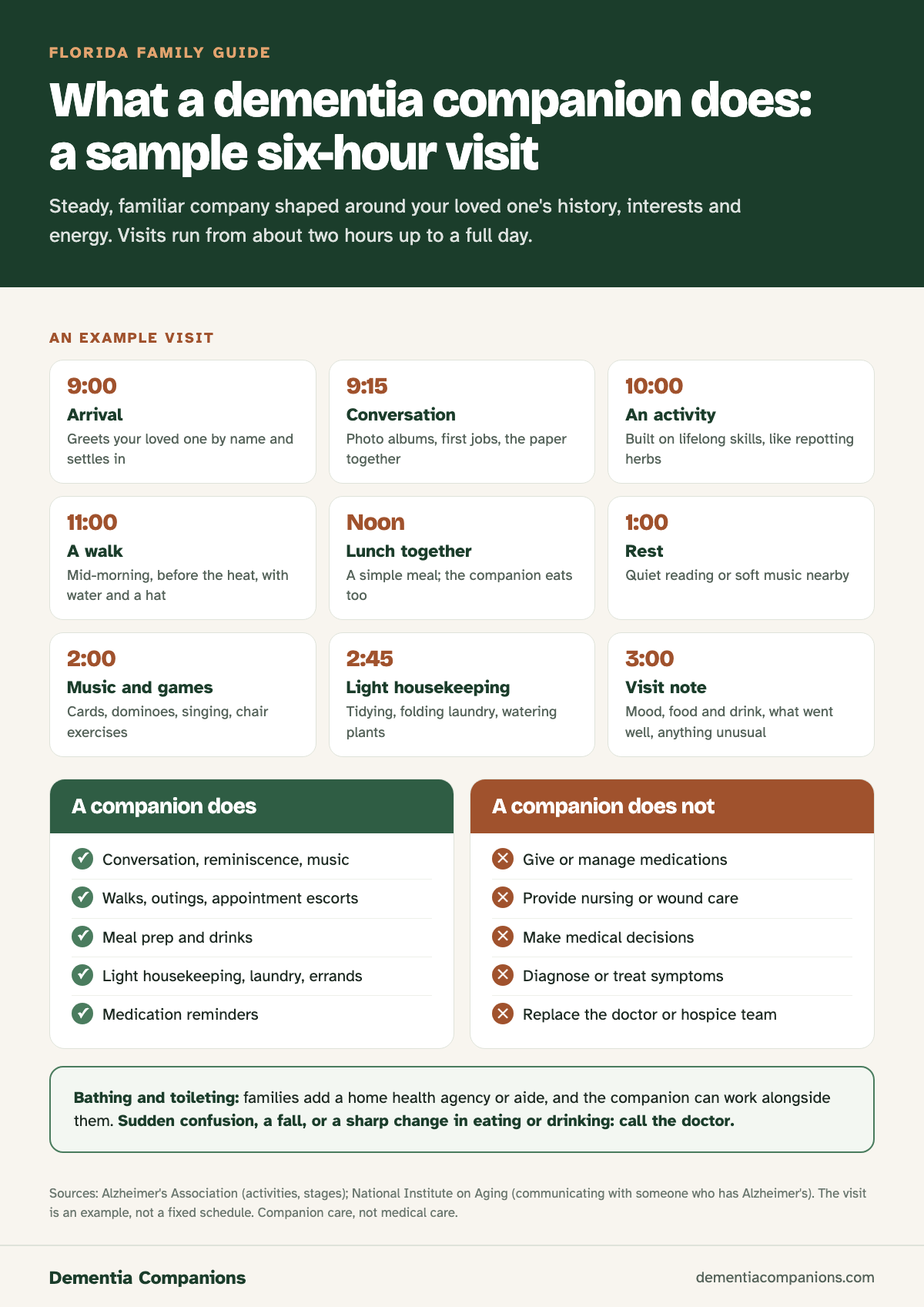
Every visit is shaped around your loved one’s history, interests, and energy. The schedule below is an example of a six-hour visit; visits can run from about two hours up to a full day.
9:00 a.m. Arrival and settling in
The companion greets your loved one by name, introduces themselves again if needed, and checks in with any family member at home. A calm, familiar start helps orient your loved one and eases worry about who is visiting.
9:15 a.m. Conversation and reminiscence
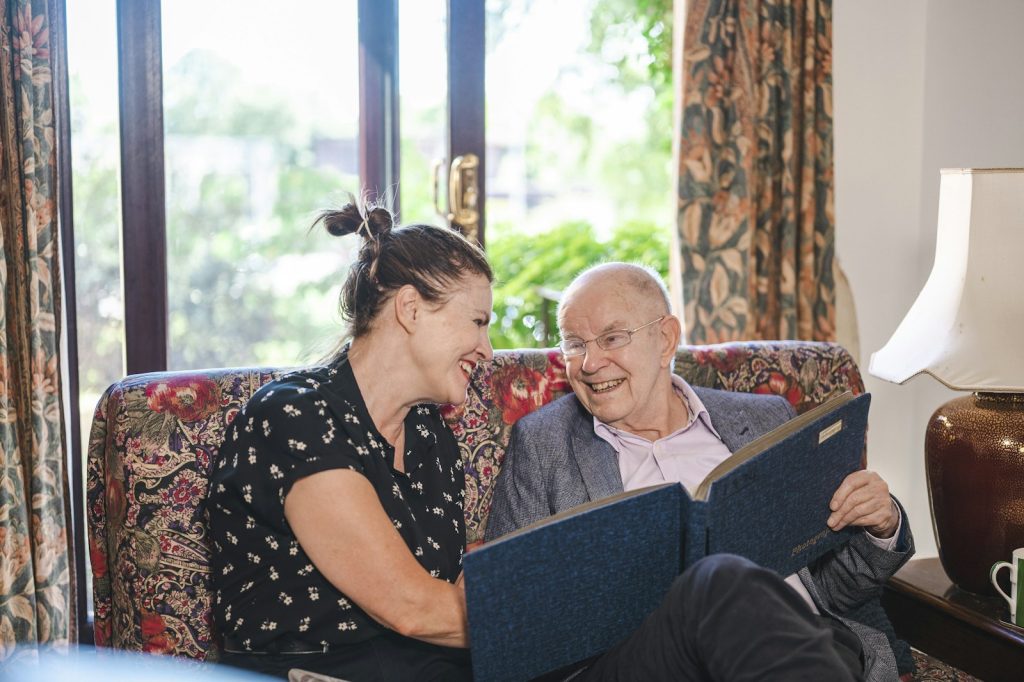
Older memories often stay stronger than recent ones. Looking through a photo album, talking about a first job, or reading the paper together can spark stories and a sense of identity.
10:00 a.m. A purposeful activity
The Alzheimer’s Association suggests building activities on lifelong skills and interests and focusing on enjoyment rather than results. A former gardener might repot herbs on the lanai; a retired bookkeeper might sort coins. See our list of activities for dementia patients at home.
11:00 a.m. A walk or short outing
In Florida, mid-morning walks beat the afternoon heat. The companion might accompany your loved one around the block, to a park, or on an errand, with water and a hat.
Noon. Lunch together
The companion prepares a simple lunch and sits down to eat too. Sharing a meal slows the pace and often helps people eat and drink more.
1:00 p.m. Rest
If your loved one usually rests after lunch, the companion respects that, perhaps reading quietly or playing soft music nearby.
2:00 p.m. Music, games, or light exercise
Card games, dominoes, singing along to old favorites, or chair exercises keep the afternoon engaged, which can help ease late-day restlessness. Our guide to music and dementia has ideas.
2:45 p.m. Light housekeeping
Tidying the kitchen, folding laundry together, or watering plants keeps the home pleasant, and many people enjoy helping.
3:00 p.m. Handover and visit note
Before leaving, the companion writes a brief note: mood, what your loved one ate and drank, activities that went well, and anything unusual. Families read these notes to stay informed, especially from a distance.
Companion tasks at a glance
| A companion does | A companion does not |
|---|---|
| Conversation, reminiscence, music | Give or manage medications |
| Walks, outings, appointment escorts | Provide nursing or wound care |
| Meal prep and drinks | Make medical decisions |
| Light housekeeping, laundry, errands | Replace the doctor or hospice team |
| Medication reminders | Diagnose or treat symptoms |
| Work alongside a home health aide who handles bathing and toileting | Give injections or change wound dressings |
If you are unsure whether a task fits, ask before the first visit.
The parts you cannot put on a schedule
The schedule is just a frame. What matters most is harder to list: the patience to hear the same story again, the skill to step into your loved one’s reality instead of correcting it, and the calm that comes from seeing the same face every visit.
Companions use simple communication: short sentences, yes-or-no choices, and attention to feelings, the same approaches the National Institute on Aging recommends. Our guide on how to communicate with a loved one who has dementia explains these techniques.
How a day in the life changes over time
A day in the life of a dementia companion looks different at each stage. In the early stage, visits may center on outings, hobbies, and keeping up social connections, with your loved one directing much of the day. In the middle stage, which the Alzheimer’s Association describes as typically the longest, the companion provides more structure, breaks tasks into simple steps, and watches more closely for safety.
Later on, visits become quieter: hand massage with lotion, familiar music, reading aloud, and simply sitting together. Presence itself becomes the activity. A good companion adjusts without being asked and tells the family what they are noticing.
Getting ready for the first visit
A little preparation helps the companion connect from day one. Share a one-page “about me” for your loved one: preferred name, first language, career, family members’ names, favorite foods, music, and topics, plus anything that tends to upset them. List the daily routine, emergency contacts, and the doctor’s number. Show the companion where things are, and if possible stay for the first half hour. Our memory and engagement visits build on exactly this kind of personal history.
How Dementia Companions works
- One consistent companion per person, screened for dementia care experience
- 3 to 5 matched video profiles within 48 hours of your first call
- Your family chooses who meets your loved one
- A brief note after each visit and a monthly care-plan review
- Free rematch if the fit is not right
- $35/hour for 40+ hours a week, no long-term contract
We serve families across South Florida, Southwest Florida, Tampa Bay, Orlando, and Jacksonville. See all areas we serve.
Example: three ways families use visits
These are illustrative examples, not real clients.
- A working daughter in Tampa books three mornings a week so her father is not alone while she is at the office.
- A husband in Boca Raton books one full day a week so he can see his own doctor, golf, and rest.
- A son in New York books afternoon visits for his mother in Naples and reads every visit note.
Each plan changes as needs change, which is why monthly reviews matter. A family might start with two short visits a week, add a third when afternoons get harder, and later book a full day so the main caregiver can rest. The companion stays the same throughout, so your loved one never has to start over with a stranger.
When your loved one needs more than a companion
If your loved one needs help with medications, skilled care, or round-the-clock supervision, a companion alone is not enough. Talk to their doctor about home health or hospice services, and see our comparison of in-home care vs memory care. A companion can still add familiar company alongside other care. If you see sudden confusion, a fall, or a sharp change in eating or drinking, call the doctor.
Watch a caregiver before you choose
Families watch video interviews like these and choose their companion. No one is sent to your parent's home until you have watched them and said yes.



Frequently asked questions
What is the difference between a dementia companion and a home health aide?
A home health aide helps with personal care like bathing and dressing, while a companion focuses on company, activities, meals, and reminders. For bathing and toileting, families add a licensed home health agency or aide, and our companion can work alongside them. Skilled home health, such as nursing or therapy, is ordered by a doctor and comes from nurses and therapists.
How long is a typical companion visit?
Visits usually run from about two hours up to a full day. Many families start with a few visits a week and adjust over time.
Will my loved one have the same companion every time?
Yes. We match one consistent companion to each person, because familiarity is what builds trust. If the fit is wrong, we rematch for free.
Can a companion drive my loved one to appointments?
Companions can escort your loved one to appointments and errands. Ask about transportation details for your area when you call.
Do companions help with sundowning?
Afternoon visits with walks, music, and calm activities can ease late-day restlessness. Read our guide to sundowning for more.
Still have questions?
Talk it through with us. A free call about your family's situation, with no obligation.
Call (689) 333-6079Send us a message- Screened for dementia care experience
- Florida ADRD training before the first visit
Conclusion
So, what does a dementia companion do? They bring steady, familiar company: conversation, activities, walks, meals, light housekeeping, errands, and reminders, plus a note after every visit so the family stays in the loop.
They are not nurses, and they work best alongside medical care. For many Florida families, a companion is the first step that makes staying at home possible.
To meet companions matched to your loved one, get 3 free caregiver profiles within 48 hours or call (689) 333-6079. Read more about our dementia companion care service.
Want a companion screened for dementia care experience?
We'll send 3-5 caregiver video profiles within 48 hours, so you can watch their video interviews before you decide. $35/hour for 40+ hours a week, no contracts.