Adult day programs give a person with dementia a safe, supervised place to spend part of a weekday, with activities, meals, social time and help with personal care, while family caregivers work, rest or run errands. In Florida, some centers hold a special state designation for Alzheimer’s care with stricter staffing and activity rules, so it pays to ask.
This guide explains what adult day programs offer, how Florida regulates them, how they help both your loved one and you, how to pay, what to ask on a tour, and how to ease your loved one into a new routine.
Table of contents
What adult day programs offer
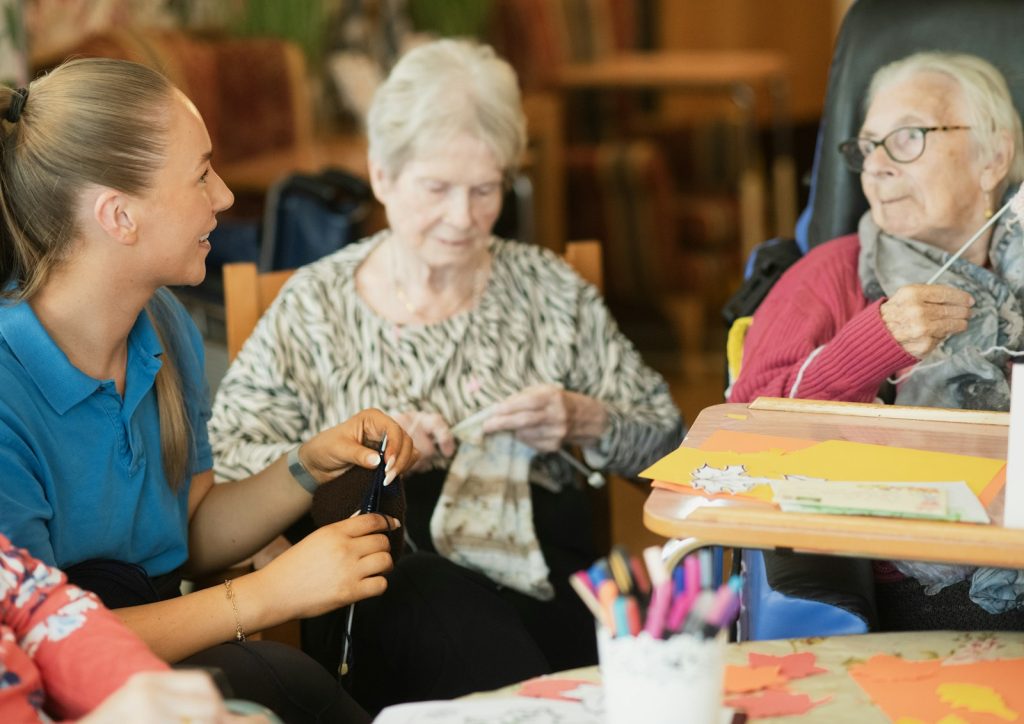
An adult day center is a community setting where your loved one can spend a few hours or a full weekday. The Alzheimer’s Association notes that services vary and few centers offer everything. Depending on the center, you may find:
- Group activities such as music, art, exercise and discussion
- Meals and snacks, sometimes with special diets
- Help with toileting, eating and other personal care
- Health services, such as help with medications or blood pressure checks
- Staff prepared for behaviors like wandering
- Therapy, either on site or on call
- Counseling and support for caregivers
- Transportation in some areas
Our glossary entry on adult day care has a quick definition to share with family.
How Florida regulates adult day programs
Adult day care centers in Florida are licensed by the Agency for Health Care Administration. You can search licensed facilities, inspection reports and legal actions on FloridaHealthFinder before you visit.
Specialized Alzheimer’s services centers
A licensed center can apply for a “specialized Alzheimer’s services adult day care center” designation under section 429.918 of the Florida Statutes. These centers must meet extra requirements, including:
- A documented dementia diagnosis and current medical information for each participant
- An individual care plan, reviewed at least every three months
- Monthly checks of weight, vital signs and level of help needed
- Secured or alarmed exits and daily headcounts
- Arranged transportation, so participants do not drive themselves
- Staff orientation on finding a participant who wanders and on Florida’s Silver Alert program
Under section 430.5025, adult day care staff who provide personal care must also complete dementia training: one hour within 30 days of starting and three more hours within seven months, with more for centers that advertise specialized care.
How adult day programs help your loved one
People living with dementia often do better with routine, social contact and meaningful activity, and a good center offers all three. Regular engagement can lift mood, ease restlessness and give shape to a day that might otherwise feel long and confusing. For someone who has become isolated at home, being part of a group can be a welcome change.
Many families also notice that an active day leads to better rest at night, although every person is different.
How adult day programs help you
Caregiving is a marathon. A day program gives you dependable hours to work, rest, see your own doctor or simply breathe. Built-in breaks are one of the best defenses against caregiver burnout. Taking time for yourself is not a failure; it is how loving care lasts. Our guide to respite without the guilt may help if stepping away feels hard.
Adult day programs vs. other options
| Option | Best for | Things to weigh |
|---|---|---|
| Social adult day center | Early to middle stages, people who enjoy groups | May not handle complex care or behaviors |
| Specialized Alzheimer’s services center | People with a dementia diagnosis who need more supervision and personal care | Fewer centers; admission requires medical paperwork |
| In-home companion | People who dislike groups, struggle with transport, or need help outside center hours | One-on-one attention at home; cost depends on hours |
| A mix of both | Families who work or need evenings and weekends covered | Coordinate routines between center and home |
Our comparison of adult day care vs. in-home respite goes deeper. Many families use a day program on some weekdays and a companion on others, or a companion to help with mornings and the ride to the center.
When a center may not be the right fit
Group settings are not for everyone. A center may be harder for someone who has always been very private, who becomes anxious in noisy rooms, who has severe hearing or vision loss, or whose behaviors put others at risk. Long rides can also be exhausting for people who tire easily. Late-stage dementia, when a person spends most of the day resting, often calls for one-on-one care at home instead. None of this is a failure. It simply means another kind of support, or a different mix, will serve your loved one better.
Paying for adult day programs in Florida
- Private pay: fees vary by center and region. The Alzheimer’s Association notes that many centers use sliding scales; ask about attendance minimums and extra charges.
- Medicaid: may cover adult day services for people with low income and few assets, depending on the state program.
- Alzheimer’s Disease Initiative: Florida’s ADI funds respite, including facility-based respite, and caregiver support through the state’s 11 Area Agencies on Aging. Call the Elder Helpline at 1-800-963-5337 to ask about eligibility and waitlists.
- Veterans: the VA lists adult day health care among its home respite options for eligible veterans. A copay may apply.
- Long-term care insurance: some policies reimburse adult day services; check the policy.
Our guide to Florida programs for dementia care explains each in more detail.
Questions to ask on a tour
- Are you licensed, and do you hold the specialized Alzheimer’s services designation?
- What dementia training does your staff have, and what is the staff-to-participant ratio?
- Is a nurse on site? Who handles medications?
- How do you handle wandering, agitation or a medical emergency?
- What does a typical day look like? Can I see the activity schedule in action?
- What are the hours, fees, minimum attendance and transportation options?
- How will you keep me informed about my loved one’s day?
- What happens during a hurricane warning or power outage?
Visit at least twice, including once during a busy activity time, and notice whether participants look engaged and staff speak to them warmly and respectfully.
Easing into a day program
Resistance at first is normal. Start with short visits, two or three times a week, at your loved one’s best time of day. Describe the center in familiar terms, such as a club, a class or “the place with music and lunch.” Keep goodbyes brief and cheerful, and let staff help.
Give it several weeks before deciding. Watch how your loved one seems across many visits rather than judging by the first day. If they ask to go home, our post on responding to “I want to go home” has phrases that help.
Getting ready for the first day
A little preparation helps staff get to know your loved one quickly and makes the first morning calmer for both of you.
- Paperwork: medical forms, a current medication list, allergies, emergency contacts and copies of any health care surrogate or power of attorney documents.
- A one-page profile: preferred name, former job, family names, favorite music and foods, what calms them and what upsets them.
- A spare set of clothes, labeled, in case of spills or accidents.
- Glasses and hearing aids, labeled, plus any needed charger.
- A familiar object, such as a photo or a cardigan, if it comforts them.
Ask staff how they will tell you about the day: a note, a phone call or an app. Share anything important from home, such as a poor night’s sleep, so they can adjust.
Signs a center is working, and red flags
Good signs include your loved one coming home tired but content, mentioning people or activities, settling more easily on center days, and staff who know their history and preferences. Over time, many families find the center becomes a welcome part of the week.
Watch for red flags too: unexplained bruises, frequent staff changes, participants left idle in front of a TV for long stretches, calls that are not returned, or growing distress that does not ease after several weeks. Raise concerns with the director first. If problems continue, look at other centers or a different mix of care.
Florida weather and day programs
Ask how the center handles summer heat on outings and transport, and what happens when a hurricane watch or warning is issued. Many centers close during severe weather, so have a backup plan, such as a companion visit at home or a family member on standby. Our hurricane preparedness guide covers the rest of your plan.
Example: how this might look for a family in Kissimmee
This is an illustrative scenario, not a real client story. A wife in Kissimmee works three days a week and cares for her husband, who has middle-stage Alzheimer’s. She finds a specialized Alzheimer’s services center nearby and enrolls him for Monday, Wednesday and Friday.
Mornings are the hard part: he resists getting dressed and she is often late for work. A companion arrives at 7:30 on center days, lays out his clothes, gets him through breakfast with gentle cues, and rides with him on the center’s van. On Tuesdays and Thursdays, the companion takes him for a walk and lunch at home. His wife gets to work on time, and he has a steady weekly rhythm he can count on.
Watch a caregiver before you choose
Families watch video interviews like these and choose their companion. No one is sent to your parent's home until you have watched them and said yes.



Frequently asked questions
What is the difference between adult day care and adult day health care?
Social programs focus on activities, meals and supervision. Programs with a health focus add services such as nursing, medication help and therapy. In Florida, centers with the specialized Alzheimer’s services designation must have a nurse on site at least 75% of their open hours.
Who can attend adult day programs?
Each center sets admission rules. Specialized Alzheimer’s services centers in Florida require a documented dementia diagnosis, current medical information and a person who does not show aggressive behavior that puts themselves or others at risk.
How do I find adult day programs near me in Florida?
Call the Elder Helpline at 1-800-963-5337 to reach your local Area Agency on Aging, and search licensed facilities on FloridaHealthFinder. Then tour more than one center.
How many days a week should my loved one attend?
Start with two or three shorter days so the routine becomes familiar, then adjust. Some families build up to full weekdays; others keep a mix of center days and home days with a companion. Watch your loved one’s energy and mood.
Can we use both a day program and an in-home companion?
Yes. Many families combine them, using a companion for mornings, transport, evenings or days the center is closed.
Still have questions?
Talk it through with us. A free call about your family's situation, with no obligation.
Call (689) 333-6079Send us a message- Screened for dementia care experience
- Florida ADRD training before the first visit
Conclusion
Adult day programs can give your loved one a structured, social day and give you regular, reliable time to recharge. In Florida, ask whether a center has the specialized Alzheimer’s services designation and check its record before you enroll.
Start slowly, give it a few weeks, and combine services so the whole week works. The right plan is the one that keeps your loved one engaged and keeps you well enough to continue.
For help on the days and hours a center does not cover, get 3 free caregiver profiles within 48 hours or call (689) 333-6079. Learn more about our dementia respite care.
Cover the hours in between
A consistent companion for mornings, evenings and non-center days, $35 an hour for 40+ hours a week.
Want a companion screened for dementia care experience?
We'll send 3-5 caregiver video profiles within 48 hours, so you can watch their video interviews before you decide. $35/hour for 40+ hours a week, no contracts.