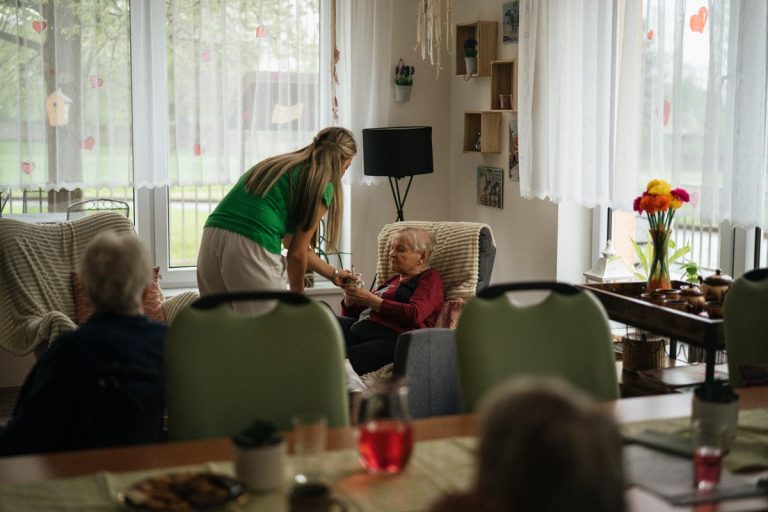
Late-stage dementia care for a loved one means shifting the goal from fixing problems to keeping them comfortable, calm and connected. Your loved one may no longer walk, speak in sentences or eat much, but they can still feel touch, warmth, music and your presence. Comfort care, help with pain and skin, gentle feeding and support from hospice make these months more peaceful.
This guide walks Florida families through what the final stage usually looks like, how to spot discomfort when words are gone, how to approach food and drink without pressure, and how hospice and in-home help fit together. About 580,000 Floridians age 65 and older live with Alzheimer’s disease, according to the Alzheimer’s Association, so you are far from alone in this chapter.
Table of contents
What late-stage dementia usually looks like
The late stage is the final phase of Alzheimer’s disease and most other dementias. The Alzheimer’s Association notes that it can last anywhere from several weeks to several years, and that care during this time is usually intensive and around the clock.
Common changes include:
- Speech shrinking to a few words or none at all
- Needing full help with bathing, dressing, toileting and eating
- Losing the ability to walk, then to sit up without support
- Trouble chewing and swallowing
- Sleeping much more of the day
- Getting infections more easily, especially pneumonia
Your loved one may not recognize faces, yet many people still respond to a familiar voice, a favorite song or a hand on the shoulder. If you want a refresher on how the earlier stages unfold, our guide to the stages of dementia explains the full arc.
Why comfort becomes the main goal of late-stage dementia care
At this point, many treatments that once made sense can cause more strain than benefit. A helpful question to bring to every decision is simple: will this make my loved one more comfortable, or less? That question can guide choices about hospital trips, new tests, waking someone for a meal, or how often to check vital signs.
Choosing comfort care is not giving up. It is a deliberate decision to protect dignity and reduce suffering. Our glossary entry on palliative care explains how this approach can begin long before the final weeks.
Comfort care for late-stage dementia: reading the body when words fade
Pain is often missed in late-stage dementia because your loved one cannot say “my hip hurts.” The Alzheimer’s Association suggests watching for physical signs, nonverbal cues such as wincing, and behavior changes such as new agitation or poor sleep. You become their voice.
| What you notice | What it may mean | What you can try |
|---|---|---|
| Grimacing, moaning, or guarding one part of the body during care | Pain from joints, skin, constipation or an injury | Move slowly, note when it happens, and tell the doctor or nurse the same day |
| Restlessness, pulling at clothes, calling out | Discomfort, a full bladder, feeling too hot or cold | Check the brief, the room temperature and position before assuming it is “just the dementia” |
| Red area on the tailbone, hips or heels | Early pressure injury | Take pressure off that spot and report it if it does not improve |
| Coughing or a wet voice after sips | Food or liquid slipping toward the airway | Sit fully upright, slow down, and ask about a swallowing review |
| No bowel movement for three days | Possible constipation | Let the care team know; it is a common, treatable source of distress |
| Fever, faster breathing or sudden sleepiness | Possible infection such as pneumonia or a UTI | Call the doctor or care team promptly |
Small comforts that make a difference
- Keep skin clean and dry. Change briefs promptly and pat skin dry rather than rubbing.
- Reposition at least every two hours for someone in bed or a chair, as the Alzheimer’s Association recommends, and cushion bony areas.
- Care for the mouth. Moist swabs and lip balm ease dryness, and gentle oral care lowers infection risk.
- Use the senses. Soft blankets, a cool cloth, dim lighting, a familiar scent or favorite music can settle the nervous system.
- Offer touch. A warm hand, slow strokes on the arm or brushing hair can soothe when words no longer reach.
Music is often one of the last ways to connect. Our post on using a familiar song to connect has ideas for building a short playlist.

Food, drink and letting go of pressure
Watching your loved one eat and drink less is one of the hardest parts of this stage. Feeding someone is a basic act of love, so declining appetite can stir up guilt and fear. In late-stage dementia the body gradually needs less, and swallowing often becomes harder.
Safer, gentler mealtimes
- Sit your loved one fully upright for meals and keep them upright for about 30 minutes afterward.
- Offer soft, moist foods and small spoonfuls. Thickened drinks may help if a clinician recommends them.
- Check that warm foods and drinks are not too hot, since your loved one may not notice.
- Go slowly and stop if they cough, turn away or seem tired.
- Offer favorite tastes for pleasure, not to “finish the plate.”
Never force food or drink, which can cause choking or distress. If swallowing is a growing worry, our gentle guide to dysphagia and dementia covers the warning signs and who can assess them.
The feeding tube question
Many families are asked whether a feeding tube should be placed. The American Geriatrics Society does not recommend feeding tubes for older adults with advanced dementia. It describes careful hand feeding as an alternative that provides comparable nutrition without the risks of a tube, such as worsening pressure ulcers.
This is a personal decision, and a health care surrogate may weigh what your loved one said they would want. Talk it through with the doctor so you understand the options for your loved one specifically.
How hospice supports families in Florida
Many families are surprised that hospice is available for advanced dementia, not only cancer. Hospice can come to your home, an assisted living community or a memory care residence. It focuses on comfort, symptom control and support for the whole family.
Under Medicare’s rules on hospice care, a hospice doctor and your loved one’s regular doctor certify that life expectancy is six months or less if the illness runs its usual course. Your loved one, or their surrogate, chooses comfort care instead of treatment aimed at a cure. Benefits run in two 90-day periods, then unlimited 60-day periods with recertification.
Medicare hospice does not pay for room and board in a facility, and it does not provide a full-time caregiver at home. A hospice team typically includes nurses, aides, social workers, chaplains and volunteers who visit on a schedule. Families still provide most of the hour-by-hour care. Learn more in our glossary entry on hospice and our overview of what Medicare covers.
Where a companion fits alongside hospice
Our companions are not nurses and do not give medication or clinical care. What they can do is sit with your loved one, read aloud, play their music, offer sips and small bites when the care plan allows, remind you of medication times, and keep a calm, familiar presence while you sleep or step out. Many families use a dementia companion alongside hospice to fill the long hours between visits.
Example: a quiet afternoon in Sarasota
This is an illustrative example, not a real client story. Picture a daughter in Sarasota caring for her father, who has late-stage Alzheimer’s and has been on hospice for a month. The hospice nurse visits twice a week, and an aide helps with bathing three mornings.
On weekday afternoons, a companion arrives for four hours. She dims the blinds against the Gulf Coast glare, plays the big-band records he loved, and keeps him company. She notices he grimaces when he shifts his left leg and writes it in her visit note. The daughter passes that note to the hospice nurse, who adjusts his comfort plan the next day.
Meanwhile, the daughter naps, showers and returns phone calls. The visit leaves her rested enough to sit with him through the evening.
When to call the doctor or hospice team
Call your loved one’s doctor, or the 24-hour hospice line if enrolled, when you notice:
- New or worsening signs of pain
- Fever, rapid or noisy breathing, or coughing during meals
- A pressure area that is open, blistered or not improving
- A sudden change in alertness, which may signal infection
- Several days of very little to drink
Call 911 for choking that blocks breathing, a serious fall, or any emergency that does not fit the plan you have agreed with the hospice team. This article is general information, not medical advice; your loved one’s doctor knows their situation best.
Caring for yourself through this season
Walking beside someone through the final stage is exhausting in body and heart. Many caregivers feel grief long before any goodbye. The Alzheimer’s Association’s 2026 Facts and Figures report found that 59% of dementia caregivers rate their emotional stress as high or very high.
Rest when you can, accept practical help and let people take shifts. Signs that you are running on empty are covered in our post on caregiver burnout. Planned breaks through dementia respite care can help you stay present for the moments that matter.
Watch a caregiver before you choose
Families watch video interviews like these and choose their companion. No one is sent to your parent's home until you have watched them and said yes.



Frequently asked questions
How long does late-stage dementia last?
It varies widely. The Alzheimer’s Association says the late stage can last from several weeks to several years. Overall health, infections, eating and swallowing changes all play a part. Your loved one’s doctor or hospice team can give a more personal sense of what to expect.
Can our loved one stay at home in late-stage dementia?
Often, yes, with the right support. The Alzheimer’s Association notes that late-stage needs can grow beyond what a household can provide, and some families choose a care community. Others combine family time, hospice visits and in-home help. Revisit the decision as needs change.
Is hospice only for the last few days?
No. Medicare hospice is for people whose doctors certify a life expectancy of six months or less,. Your loved one can stay on hospice longer than six months if they are recertified, and families can ask about hospice as soon as they have questions.
Should we stop offering food if our loved one refuses?
Do not force food or drink. Offer small amounts of favorite soft foods and sips for comfort, and stop when they turn away or cough. Talk with the care team about what is safest for your loved one.
Can a companion help during hospice?
Yes. A companion can provide hours of calm presence, music, reading, gentle engagement and medication reminders between hospice visits. Companions do not give medication or nursing care, so they work alongside the hospice team rather than replacing it.
Still have questions?
Talk it through with us. A free call about your family's situation, with no obligation.
Call (689) 333-6079Send us a message- Screened for dementia care experience
- Florida ADRD training before the first visit
Conclusion
Late-stage dementia changes the question from “how do we fix this?” to “how do we keep them comfortable?” Watching for pain, keeping skin healthy, easing mealtimes and calling in hospice are the main tools you have.
You do not have to keep vigil alone. Comfort care works best when it includes rest for the people giving it.
If you would like a calm, consistent companion at home, get 3 free caregiver profiles within 48 hours or call (689) 333-6079. Our companions visit for $35 an hour for 40+ hours a week, with no long-term contract; call us about shorter schedules. Learn more about dementia companion care.
A familiar presence for the hardest weeks
One consistent companion who works alongside your hospice team.
Want a companion screened for dementia care experience?
We'll send 3-5 caregiver video profiles within 48 hours, so you can watch their video interviews before you decide. $35/hour for 40+ hours a week, no contracts.