Hurricane season and dementia call for planning well before a storm is named. Know your evacuation zone, sign up for the Florida Special Needs Registry if your loved one qualifies, pack a go-bag with medicines, documents and comfort items, and decide early where you will go. Leaving early and keeping routines steady will reduce fear and confusion.
This guide gives Florida caregivers a step-by-step plan: what to pack, who to register with, how to keep your loved one calm during the storm, what to do if you evacuate and how to handle the days after. It is written for families who want to act once, calmly, instead of scrambling when the cone of uncertainty points their way.
Table of contents
Why storms are harder for people with dementia
A person with memory loss may not understand why the power is out or why windows are being covered.
Wind, rain and sirens can be frightening. Routines fall apart. Unfamiliar shelters and hotels can trigger agitation and raise the risk of wandering. The National Institute on Aging notes that people with Alzheimer’s or another dementia may need extra help during disasters and extra support to lessen agitation during a stressful event.
Plan early for hurricane season and dementia care
The calmest storm plan is the one you built in a quiet week. Start in late spring.
Step 1: Know your evacuation zone
Florida’s evacuation zones are based on flood risk from storm surge, labeled A through F. The Florida Division of Emergency Management notes that storm surge flooding is the greatest threat to life in a hurricane. Look up your loved one’s address on the state’s Know Your Zone page, and check your own address too if they might stay with you.
Step 2: Consider the Special Needs Registry
Florida’s Special Needs Registry helps local emergency managers plan for residents who may need extra help in a disaster. Registering does not automatically qualify someone for a special needs shelter, and it is not a guarantee of help. Contact your county emergency management office with questions about shelters, transportation or evacuation.
Step 3: Decide where you will go
The state notes that staying with friends or family outside the evacuation zone, or in a stronger house, may be the safest and easiest option. For someone with dementia, a familiar relative’s home is usually far less stressful than a crowded shelter.
Step 4: Share the plan
Tell family, neighbors and paid caregivers who is responsible for what. Put the plan in writing and keep it with the go-bag.

Build a dementia-friendly go-bag
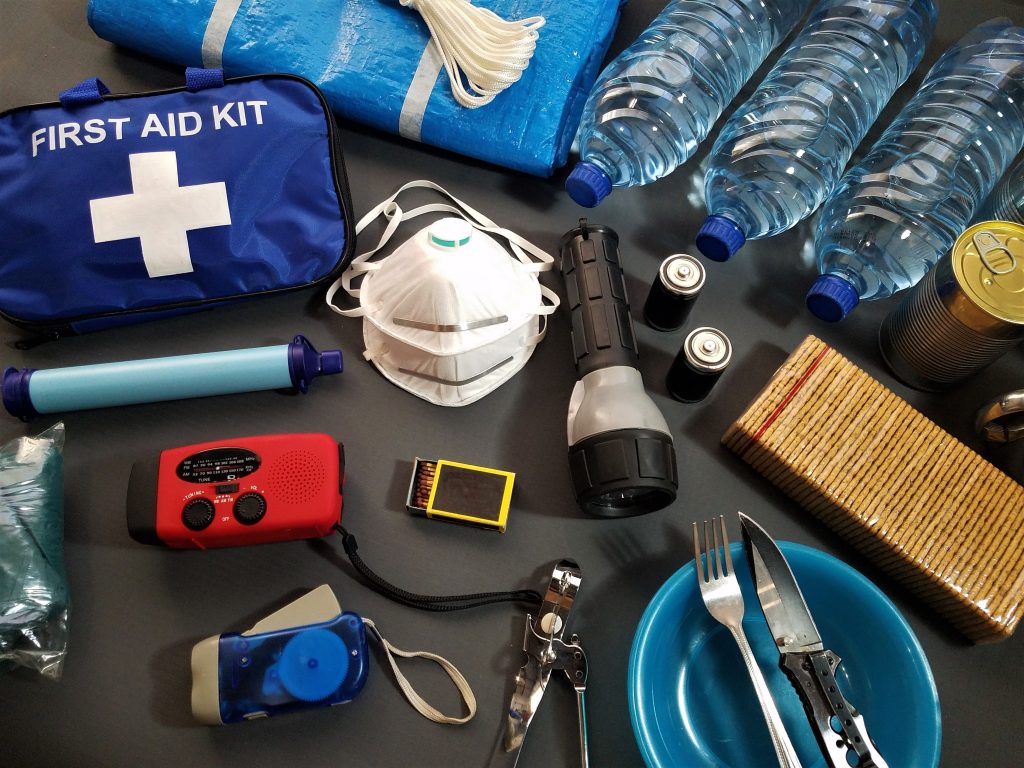
The NIA recommends an emergency kit with essentials for three to seven days, including water (one gallon per person per day), nonperishable food, a battery or hand-crank radio, flashlights, a first-aid kit and medicines. For dementia, add the items in this table.
| Category | What to pack |
|---|---|
| Medicines | Supply of all medicines plus a written list of names, doses and prescribers |
| Documents | ID, insurance cards, medical summary, legal papers in a waterproof bag |
| Comfort | Favorite blanket or pillow, photos, a familiar sweater, snacks |
| Hygiene | Incontinence supplies, wipes, hand sanitizer, a change of clothes |
| Safety | Recent photo, ID bracelet, glasses and hearing aids with spare batteries |
Our hospital information sheet doubles as a one-page medical summary for shelters.
Medical equipment and power
The NIA notes that only about 25% of older adults who use electricity-powered medical equipment have a backup power source. If your loved one uses oxygen or other powered equipment, ask the supplier and doctor about backups well before a storm. Plan for refrigerated medicines during outages.
Keeping calm during the storm
Your loved one will take emotional cues from you. A steady, matter-of-fact tone helps them feel safe even if they cannot follow what is happening.
- Keep meals, music and rest at the usual times when you can.
- Speak slowly and reassuringly. Avoid long explanations of danger.
- Turn off nonstop storm coverage in the room where your loved one sits.
- Use headphones with familiar music to soften the sound of wind.
- Keep a battery lantern lit so the room is not suddenly dark.
Simple tasks, like sorting cards or folding towels, can steady anxious hands.
Preventing wandering
Storms and new places raise the risk of wandering. The NIA recommends that people with dementia carry ID or wear a medical bracelet with contact information. Keep a recent photo on your phone. Our guide to dementia wandering in Florida has more steps.
If you have to evacuate
Leave early when you can. Long lines of traffic and crowded shelters are especially hard for someone with dementia.
- Follow the orders of local officials. Not every zone is ordered out in every storm.
- Load the car calmly, with the go-bag and comfort items within reach.
- Explain simply: “We’re going to stay with Sandra for a few days.”
- Plan rest stops for the bathroom, water and a stretch.
- At your destination, set up a quiet corner with familiar things right away.
In shelters or a relative’s home, stay within arm’s reach and tell staff or hosts that your loved one has dementia. The NIA also lists texting SHELTER and your ZIP code to 43362 as a way to find open shelters.
Example: a storm plan in Cape Coral
This is an illustrative scenario, not a real family. A daughter in Fort Myers looks after her father, who lives alone in Cape Coral with early-to-moderate dementia. His home is in a low evacuation zone.
In May she looks up his zone, talks with his doctor and calls county emergency management about whether he should register. She packs a labeled go-bag with his medicine list, a photo album, his favorite cap and two weeks of supplies, and stores it in his hall closet.
When a storm threatens in September, she does not wait. Two days ahead she brings him to her house inland, sets up his recliner and photos in the guest room, and keeps his usual lunch and nap times. He asks often when he is going home, and she answers the same way each time: “After the storm passes, Dad. You’re safe here with me.”
After the storm passes
Recovery can be disorienting too. Damage, heat without power and broken routines may unsettle your loved one for days.
- Return to normal routines as soon as you can.
- Watch for dehydration in the heat. Read our guide to preventing dehydration in Florida’s summer.
- Expect more confusion, repeated questions or poor sleep for a while.
- Check the home for hazards before your loved one returns.
The NIA lists the Disaster Distress Helpline at 800-985-5990 for emotional support after a disaster, for you as well as your loved one.
When to get medical help
Call 911 for emergencies. Contact the doctor if your loved one becomes suddenly more confused, very sleepy, feverish or stops drinking, or if medicines were missed or lost. Sudden confusion can signal dehydration, infection or delirium. This article is general information, not medical advice.
Frequently asked questions
Should a person with dementia go to a general shelter?
A general shelter can be noisy and confusing. If possible, plan to stay with family or friends outside the evacuation zone. Ask your county emergency management office about special needs sheltering options well before hurricane season.
Does the Special Needs Registry guarantee a shelter spot?
No. Florida’s registry helps local emergency managers plan, but registering does not automatically qualify someone for a special needs shelter. Your county will explain local evacuation and sheltering options.
How much medicine should be in the go-bag?
Ask the doctor and pharmacist. Many families keep at least a week or two on hand during the season, plus a written list of every medicine, dose and prescriber, in case refills are delayed.
How do I keep my loved one calm during a power outage?
Keep a battery lantern lit, stick to familiar routines, offer snacks and water, play familiar music on a battery device and speak calmly. Keep the room as cool as safely possible.
Can a companion help us prepare?
Yes. A companion can help organize supplies, keep your loved one company while you board up and run errands, and provide a calm, familiar presence before and after a storm.
Still have questions?
Talk it through with us. A free call about your family's situation, with no obligation.
Call (689) 333-6079Send us a message- Screened for dementia care experience
- Florida ADRD training before the first visit
Conclusion
Hurricane season and dementia care go best with an early, written plan. Know your zone, look into the Special Needs Registry, pack a dementia-friendly go-bag and decide where you will go.
During the storm, keep routines and your voice steady. After it, return to normal rhythms and watch for dehydration and sudden confusion. Our Florida dementia resources page lists more local help.
If you would like a steady companion before and after the storm, get 3 free caregiver profiles within 48 hours or call (689) 333-6079. Our dementia companion care is $35 an hour for 40+ hours a week.
Want a companion screened for dementia care experience?
We'll send 3-5 caregiver video profiles within 48 hours, so you can watch their video interviews before you decide. $35/hour for 40+ hours a week, no contracts.