Using music to connect with a loved one with dementia works best when the songs are personal: the hymns, standards or hits they loved when they were young. Play them at a comfortable volume, without competing noise, and join in by humming, singing or swaying. Familiar music for dementia can lift mood, ease tense moments and bring back a flash of the person you know.
This guide explains why music reaches people when words do not, how to build a playlist that fits, when to use music through the day, how to sing and move together, and a few cautions. It is written for Florida families, whose loved ones may have grown up on anything from big band to boleros to gospel.
Table of contents
Why music reaches where words cannot
Music often stays with people long after other memories fade.
The Alzheimer’s Association notes that even in the late stages of Alzheimer’s, a person may be able to tap a beat or sing lyrics to a song from childhood, and that music provides a way to connect even after verbal communication becomes difficult. It also reports that studies have shown music may reduce agitation and improve behavioral issues common in the middle stages.
Music is not a treatment for dementia and will not slow the disease. As an everyday tool, though, it is free, flexible and often joyful.
Building a playlist that fits your loved one
The most powerful music is personal. A generic “relaxing” playlist rarely lands like a song from their own life.
Start with their youth
Think about the music of their teens and early adult years, their wedding song, what played at church, or a singer they followed. The Alzheimer’s Association suggests that a faster song from someone’s childhood may boost spirits and bring back happy memories.
Include their culture and faith
Florida families come from everywhere. Gospel, country, Motown, doo-wop, big band, salsa, bolero, Haitian kompa, Broadway or Yiddish folk songs may all resonate. Hymns and prayers set to music are often deeply familiar.
Let them choose when possible
The Alzheimer’s Association recommends identifying music that is familiar and enjoyable, and letting the person choose if they can. Ask relatives and old friends for ideas.
Remove interruptions
Choose a source without commercials, which can confuse. A downloaded playlist, CDs or a paid, ad-free stream works well.
Watch and adjust
Smiling, tapping, humming or singing along means you have found something good. Frowning, restlessness or turning away means try another song.
Music to connect with a loved one with dementia through the day
Once you have favorites, music can support the whole day.
| Time of day | Goal | Music idea |
|---|---|---|
| Waking up | Gentle start | Soft, familiar songs |
| Bathing, dressing | Ease stress | A beloved song before and during |
| Midday | Energy, movement | Upbeat tunes from their youth |
| Late afternoon | Calm restlessness | Slow, soothing favorites |
| Bedtime | Wind down | Lullabies, hymns or quiet instrumentals |
Calming late-day restlessness
Late afternoon and evening are hard hours for many families. The Alzheimer’s Association lists soft music among calming evening activities for sundowning, along with good lighting and less stimulation. In Florida summers, when the heat keeps everyone indoors, a playlist can fill that stretch gently. See our sundowning guide.
Easing personal care
If bathing or dressing tends to bring resistance, try a favorite song first to set the tone, and keep it playing quietly. Our guide on getting dressed with dementia has more ideas.
Redirecting a hard moment
The National Institute on Aging suggests redirecting attention to something like listening to music when a person is upset. The Alzheimer’s Association also suggests engaging a person in music or art when they are anxious or agitated.
Singing, moving and sharing the moment
Music is at its best when it is shared. You do not need a good voice. Your loved one is not judging the performance, only feeling the connection.
- Sit close, make eye contact and sing along.
- Hold hands and sway, or clap to the beat.
- Dance if they are steady and willing.
- Pause the song and let them fill in a line.
- Talk about the memories a song brings up.
Many caregivers say singing an old song together is one of the times the relationship feels mutual again.
Adjusting music as dementia progresses
What works changes over time, so revisit your approach every few months.
Early stage
Your loved one can often help build the playlist, tell you the story behind each song and enjoy concerts, choirs or dance classes. This is a good time to record them talking about what certain songs mean to them.
Middle stage
Keep choices simple: offer two songs rather than asking what they want to hear. Use music to signal parts of the day, such as one song that always plays before lunch, and to soften tasks like bathing.
Late stage
Music often becomes a quiet form of comfort. Sit close, hum softly, hold a hand or gently rock to the rhythm. Even if your loved one no longer sings, watch for small signs, such as eyes opening, a relaxed face or fingers moving to the beat. Our guide to late-stage dementia care covers other comfort measures.
Make a simple music memory sheet
Write down your loved one’s top ten songs, the artists they loved, the music of their faith or culture, and any songs to avoid because they bring sadness. Keep it with the playlist so every relative or companion can use it. Add notes over time about which songs calm and which energize.
Gentle cautions
Keep the volume comfortable and turn off the TV and other noise; the Alzheimer’s Association warns against sensory overload. Some songs stir sadness or grief. A few tears are not always bad, but follow your loved one’s lead and switch to something lighter if they become distressed.
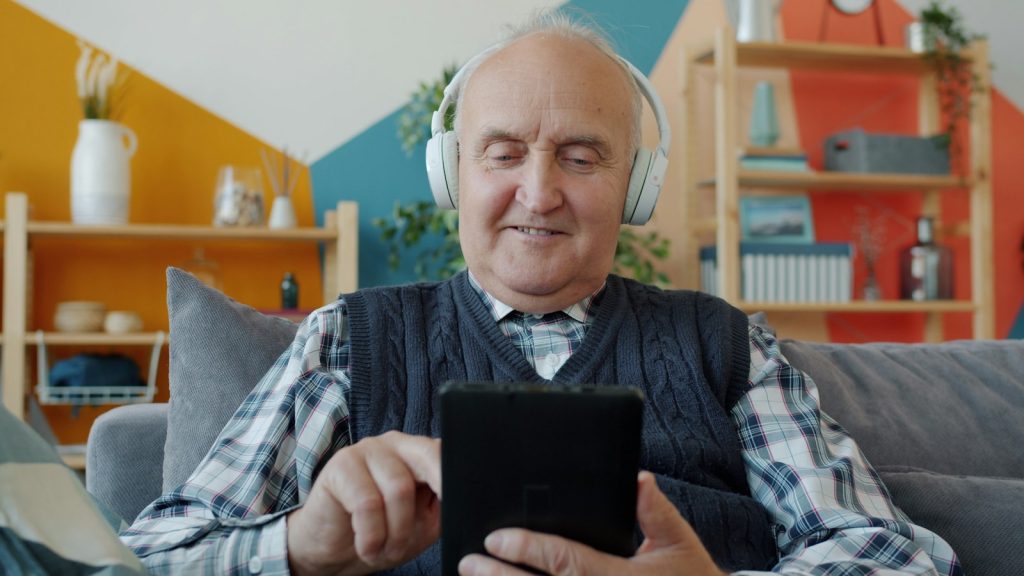
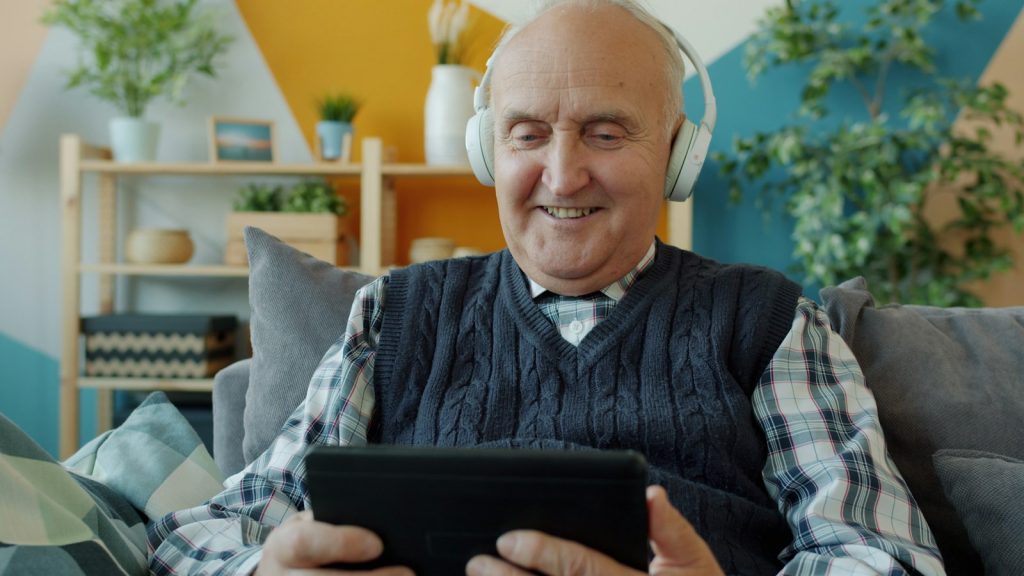
Headphones help some people focus and confuse others. Try both ways. If a hearing aid is worn, check it is working. There is no single right way, only what works for the person in front of you.
Example: an afternoon in Coral Gables
This is an illustrative example, not a real client story.
A daughter learns from her aunt that her mother loved boleros and sang in a church choir in Havana. She makes a playlist of both and asks the companion who visits weekday afternoons to play it after lunch.
Within a few visits, her mother hums along and starts telling stories about dances she went to as a girl. On restless evenings, the daughter plays the slow hymns, and her mother settles more easily.
Beyond playlists: other ways to enjoy music
Music can be more than listening. Simple instruments like a tambourine or shaker invite participation. Watching recordings of favorite performers, attending a short outdoor concert in cooler months or visiting a familiar house of worship may bring joy. Art can pair well with music too; see our dementia activities hub and 10 meaningful activities at home.
When to talk with the doctor
Music can ease mild restlessness, but it is not a substitute for medical care. If agitation is new, sudden or severe, or your loved one seems to be in pain, contact their doctor. Sudden changes can signal infection, pain or a medication problem. This article is general information, not medical advice.
Frequently asked questions
What kind of music is best for someone with dementia?
Music that is familiar and meaningful to them, often from their youth, faith or culture. Choose songs without commercials, and watch their reactions to see what they enjoy.
Can music for dementia help with agitation?
The Alzheimer’s Association reports that studies have shown music may reduce agitation and improve some behavioral issues. Calm, familiar songs at a soft volume are a good place to start.
Can people with late-stage dementia still respond to music?
Often yes. The Alzheimer’s Association notes that even in late stages, a person may tap a beat or sing lyrics to a childhood song.
Should I use headphones?
It depends on the person. Headphones help some people focus on the music and confuse others. Try both, and watch their reaction.
Can a companion use music during visits?
Yes. Our companions weave music, walks and reminiscence into visits as part of memory and engagement activities, and note in their visit summary what your loved one enjoyed.
Still have questions?
Talk it through with us. A free call about your family's situation, with no obligation.
Call (689) 333-6079Send us a message- Screened for dementia care experience
- Florida ADRD training before the first visit
Conclusion
Using music to connect with a loved one with dementia is simple: choose their songs, keep the setting calm, and share the moment by singing, swaying or holding hands. Use soft songs to ease hard hours and lively ones to lift the day.
Watch their reactions and adjust as you go.
If you would like a companion who brings music and connection into each visit, get 3 free caregiver profiles within 48 hours or call (689) 333-6079. Learn about our memory and engagement service.
Want a companion screened for dementia care experience?
We'll send 3-5 caregiver video profiles within 48 hours, so you can watch their video interviews before you decide. $35/hour for 40+ hours a week, no contracts.