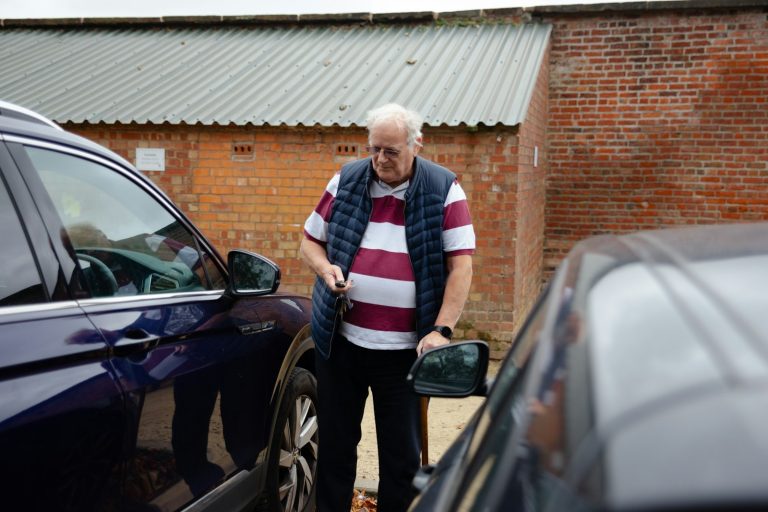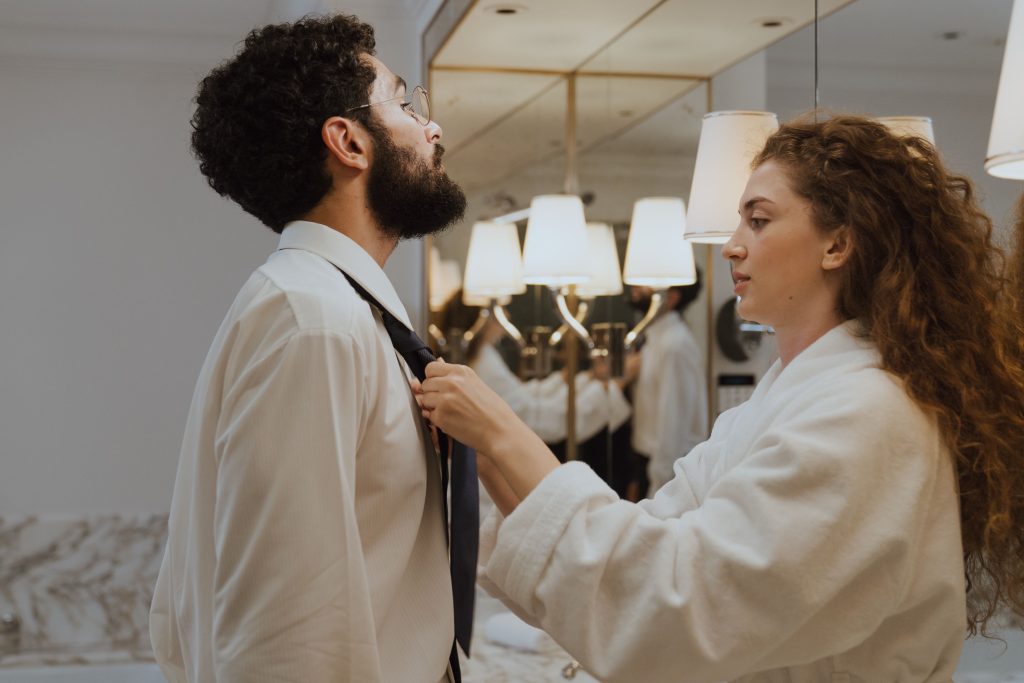
Getting dressed with dementia gets easier when you simplify: offer two outfits instead of a full closet, lay clothes out in the order they go on, hand over one item at a time with short directions, and choose soft, stretchy clothes with easy fastenings. Allow plenty of time, keep the room warm and private, and let your loved one do as much as they can.
This guide explains why dressing becomes hard, how to set the stage, what clothing works best in Florida’s heat and air conditioning, step-by-step ways to help, what to do about resistance or undressing at the wrong times, and when to involve the doctor.
Table of contents
Why dressing becomes difficult
Getting dressed involves many small steps that most of us do without thinking.
Dementia affects memory, sequencing and how the brain reads what it sees. Your loved one may forget the order of steps, struggle to tell the front of a shirt from the back, feel overwhelmed by choices, or not see why a change of clothes is needed. Stiff joints, weak hands and poor balance add to the challenge.
Resistance is rarely defiance. A person who pulls away may feel cold, exposed, rushed or confused. Seeing it as communication makes patience easier.
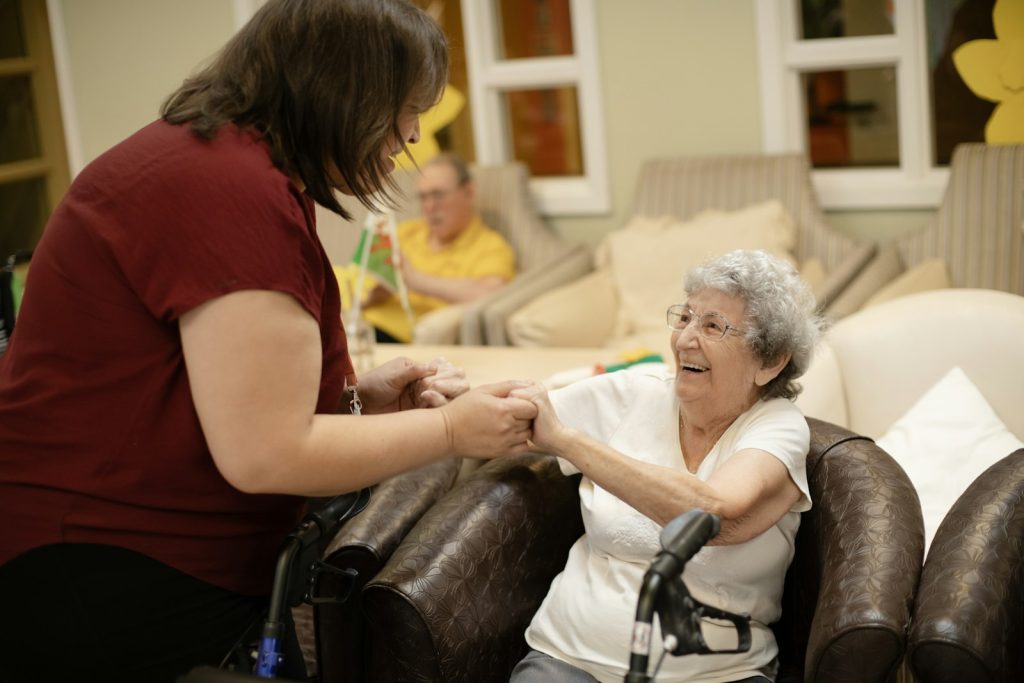
Set the stage for an easier morning
A few changes before you start prevent much of the frustration.
Limit choices
The Alzheimer’s Association suggests removing excess clothing from closets and offering just two options. Store off-season clothes elsewhere.
Lay clothes out in order
Arrange the outfit in the order it goes on: underwear first, then pants, shirt, socks and shoes. Some families stack items so the first piece is on top.
Keep the routine the same
The National Institute on Aging suggests dressing at the same time each day. Doing it in the same place and order builds familiarity.
Warm, private and calm
Close curtains and doors, warm the room if the air conditioning is strong, and turn off the TV. Feeling exposed or cold makes many people resist.
Allow extra time
Hurrying causes anxiety and frustration. If mornings are rushed before appointments, lay out clothes the night before and start earlier.
Getting dressed with dementia: step-by-step help
How you help matters as much as what they wear.
- Approach from the front, smile and say what you are doing.
- Hand over one item at a time.
- Give one short direction: “Here’s your shirt. Arm in here.”
- Guide gently, such as starting an arm toward the sleeve.
- Pause and praise each step.
- Let them finish what they can, like pulling up pants or one button.
Small successes protect dignity and a sense of ability.
Mirrors: help or hindrance?
Some people like checking themselves in a mirror. Others become distressed by their reflection; the NIA notes that mirror images may confuse a person with Alzheimer’s. Watch the reaction and adjust.
Choose clothing that is easy to manage
The right clothes turn a struggle into something manageable. The Alzheimer’s Association suggests front-button tops, loose, soft, stretchy fabrics, Velcro in place of buttons, snaps and zippers, and comfortable, non-slip shoes.
| Instead of | Try |
|---|---|
| Small buttons, zippers | Velcro closures or large zipper pulls |
| Pullovers with tight necks | Front-opening tops, wide necklines |
| Belts and fly fronts | Elastic waistbands |
| Lace-up shoes, flip-flops | Closed-back, non-slip slip-ons or Velcro shoes |
| Scratchy fabric, tags | Soft, tag-free cotton |
Dressing for Florida weather
Florida means heat and humidity outdoors and strong air conditioning indoors. Lightweight, breathable cotton helps prevent overheating, and a light cardigan makes it easy to adjust. The Alzheimer’s Association notes that layers are fine as long as the person does not overheat, and that clothing should suit the outdoor weather. Your loved one may not notice or say they are too hot or cold, so check.
When your loved one resists
If your loved one becomes upset, stop. Reassure them, offer a drink or a song, and try again in ten or fifteen minutes. A different person or a different approach sometimes works better.
Check for causes. The Alzheimer’s Association suggests looking for pain, hunger, thirst or a full bladder when a person is anxious or agitated. Pulling away when an arm is lifted may mean a sore shoulder. Our guide to recognizing pain in dementia can help, and our post on agitation and aggression covers calm responses.
Choose your battles
Mismatched colors or a shirt inside out matter far less than a peaceful morning. The Alzheimer’s Association suggests staying flexible and not worrying much about mismatched clothes.
The same outfit every day
Many people with dementia want to wear the same clothes daily. The Alzheimer’s Association suggests buying duplicates of favorite outfits so you can wash one while another is worn. Undergarments should be kept clean, since poor hygiene can lead to infections.
Clothing for a loved one who undresses at the wrong times
Undressing in the living room or in public is upsetting for families, but it usually has a reason. Your loved one may be too hot, need the bathroom, feel itchy or tight in their clothes, be bored, or think it is bedtime.
- Check the temperature and comfort of clothing first.
- Offer regular bathroom trips.
- Redirect with an activity or snack.
- Try clothes that fasten in the back or one-piece outfits.
Adaptive clothing made for this purpose is widely sold. If undressing is new or sudden, mention it to the doctor.
Grooming as part of the routine
Looking put-together still matters to many people with dementia, and it can lift their mood for the day.
Keep familiar touches
If your mother always wore lipstick or your father always combed his hair a certain way, keep those habits. A favorite scent or watch can be part of feeling like themselves.
Simplify the tools
An electric razor is often easier and safer than a blade. A wide-handled brush or comb is easier to grip. Set out only the items needed for that day.
Do it together
Brushing your own hair beside your loved one, or modeling each step, gives a gentle cue without giving orders.
Example: a smoother morning in Sarasota
This is an illustrative example, not a real client story.
A wife finds that dressing her husband takes nearly an hour and often ends in tears. She clears the closet to six outfits, buys two more of his favorite polo shirt and switches to pants with elastic waists.
Each night she stacks the next day’s clothes in order on a chair. In the morning she plays his favorite big band record, hands him one piece at a time and lets him button the top button himself. Dressing now takes twenty minutes, and on the three mornings a companion visits, she gets an unhurried coffee.
When to involve the doctor
Talk with your loved one’s doctor if dressing suddenly becomes much harder, if your loved one seems to be in pain when moving, if there is new weakness or stiffness, or if undressing at the wrong times appears suddenly. An occupational therapist, if the doctor refers you, can suggest tools and techniques. This article is general information, not medical advice.
Frequently asked questions
How can I make dressing easier for someone with dementia?
Offer two outfit choices, lay clothes out in order, give one short direction at a time, choose easy fastenings like Velcro and elastic, keep the room warm and private, and allow plenty of time.
What clothing is best for dementia patients?
Loose, soft, stretchy clothing with front openings, elastic waists and Velcro closures, plus comfortable non-slip shoes. In Florida, breathable cotton with a light layer for air conditioning works well.
What clothing helps dementia patients who undress?
Clothes that fasten in the back and one-piece outfits can help. First check for causes like heat, discomfort, boredom or needing the bathroom, and talk with the doctor if it starts suddenly.
Why does my loved one want to wear the same clothes every day?
Familiar clothes feel safe and are easier to manage. Buying duplicates of favorite outfits lets you keep them clean without a daily disagreement.
Can a companion help with dressing?
In part. Our companions offer gentle cues, lay out clothes and keep the morning routine calm, but they do not provide hands-on personal care such as dressing or grooming. For that, families add a licensed home health agency or aide, and our companion can work alongside them, as well as alongside any nurse or hospice team.
Still have questions?
Talk it through with us. A free call about your family's situation, with no obligation.
Call (689) 333-6079Send us a message- Screened for dementia care experience
- Florida ADRD training before the first visit
Conclusion
Getting dressed with dementia is easier with fewer choices, clothes laid out in order, one-step directions, easy fastenings and plenty of time. Keep the room warm and private, and let your loved one do as much as possible.
When resistance happens, pause, look for a cause and choose your battles.
If you would like a patient companion to help with morning routines, get 3 free caregiver profiles within 48 hours or call (689) 333-6079. Learn about our in-home support and companion care.
Want a companion screened for dementia care experience?
We'll send 3-5 caregiver video profiles within 48 hours, so you can watch their video interviews before you decide. $35/hour for 40+ hours a week, no contracts.