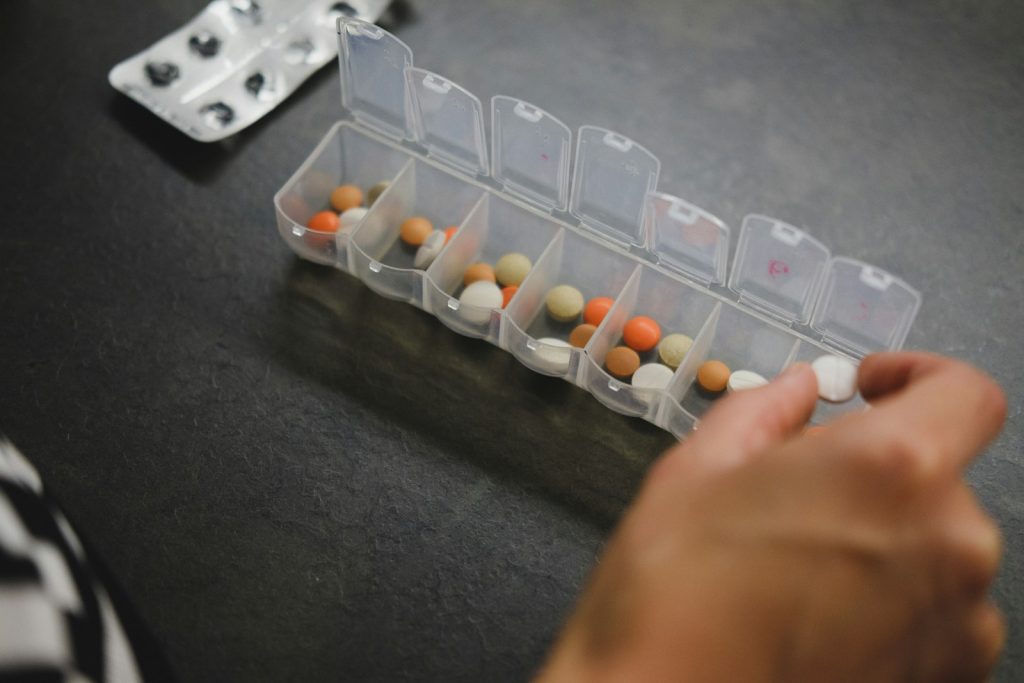
Managing medications for a loved one with dementia comes down to a few safe habits: keep one up-to-date medicine list, use a weekly pill organizer, give doses at the same times each day, check off each dose and lock up extra supplies. Ask the pharmacist before crushing pills, and never change a dose without the prescriber’s okay.
This guide to medication management for dementia explains why medicines get harder to manage, how to build a reliable routine, what to do when your loved one refuses, how Florida heat affects medicines and how to work with the care team. It is general information, not medical advice.
Table of contents
Why medicines get complicated with dementia
Many older adults take several medicines from different doctors.
As dementia progresses, your loved one may forget whether they took a dose, take it twice or refuse it. Swallowing can get harder. They may not be able to tell you about side effects. The National Institute on Aging notes that taking medicines the wrong way, or mixing certain drugs and supplements, can be dangerous, and that people with Alzheimer’s often need help with medicines.
Managing medications with a simple routine
Consistency is your best friend. A predictable rhythm reduces confusion for your loved one and helps you remember too.
Keep one master list
The NIA recommends a list of every medicine, including over-the-counter drugs, vitamins, supplements and herbal remedies, with the dose, the time and the reason it was prescribed. The Alzheimer’s Association suggests adding the start date and bringing the list to every appointment. See its medication safety page.
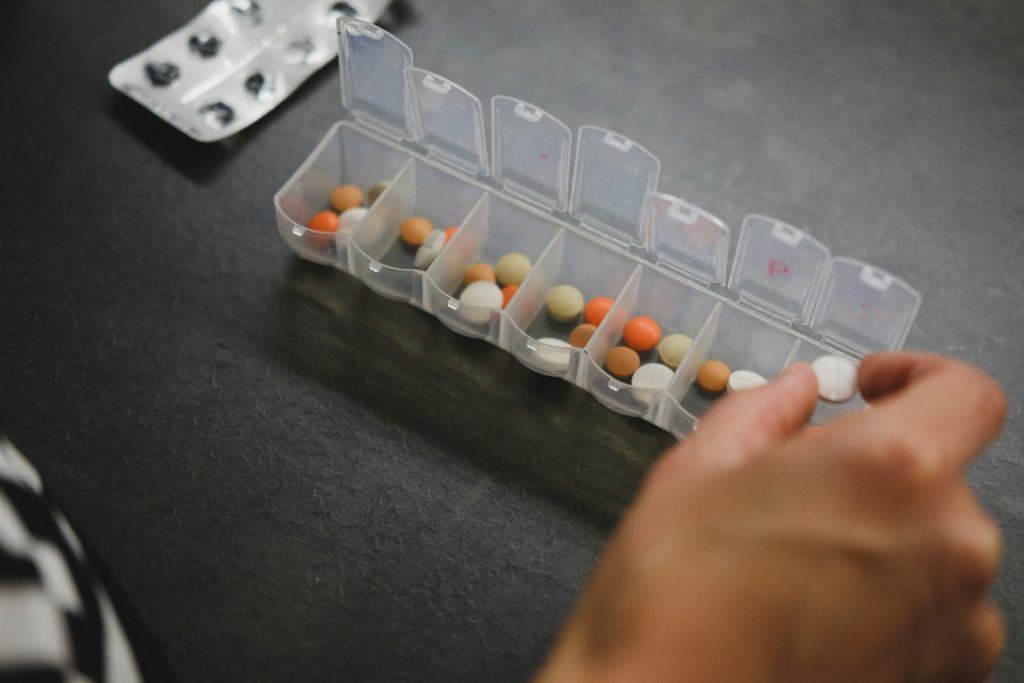
Use a weekly pill organizer
Fill the pill organizer on the same day each week, at a quiet time, with the master list in front of you. Choose one with clearly labeled days and times of day.
Tie doses to daily habits
Give medicines at the same times and place each day, linked to something that already happens, such as breakfast or bedtime. Ask the pharmacist which medicines should be taken with food.
Set reminders and check off doses
Phone alarms, a timer or a chart all work. A check-off sheet shows anyone helping what has already been given. Our printable dementia care log has space for this.
Store medicines safely
The Alzheimer’s Association recommends a locked drawer or cabinet to prevent accidental overdose, and safely discarding unused or expired medicines. Keep the poison control number handy, and call poison control or 911 if you suspect an overdose.
Sample medication routine
| When | Task | Who |
|---|---|---|
| Sunday afternoon | Fill the weekly pill organizer from the master list | Family caregiver |
| Breakfast | Morning doses with food if directed; check off | Caregiver gives; companion can remind |
| Midday | Midday doses; offer water | Caregiver |
| Bedtime | Evening doses; check off | Caregiver |
| Monthly | Synchronize refills; review the list | Caregiver and pharmacist |
Adjust times to match your loved one’s prescriptions. If several people help, keep the chart in one spot, such as the fridge, so nobody has to guess whether a dose was given.
When your loved one refuses medicine
Refusing pills is common and rarely deliberate. Your loved one may not understand why they need it, may find it hard to swallow, or may feel a loss of control.
- Stay calm and don’t argue. The Alzheimer’s Association suggests stopping and trying again later.
- Use one short, simple instruction at a time.
- Offer the pill with a favorite drink.
- Try at their most relaxed time of day.
If refusal happens often, tell the prescriber. Our article on responding to care refusal has more ideas.
Never crush pills without asking
Some pills must be swallowed whole to work properly or safely. The NIA and Alzheimer’s Association both advise checking with the doctor or pharmacist before crushing any pill or mixing it into food. A liquid form may be available. If swallowing is getting harder, see our guide to dysphagia and dementia.
Florida heat and medication safety
Heat adds another layer. The CDC’s heat and medications guidance lists many medicines that may raise the risk of heat-related illness, including diuretics, some blood pressure medicines, antipsychotics, some antidepressants and anticholinergic antihistamines.
- Keep your loved one cool and well hydrated in hot months.
- Watch for dizziness, unusual sleepiness or new confusion.
- Never leave medicines in a hot car. The CDC notes that insulin can lose strength and inhalers can burst in extreme heat.
- Plan for refrigerated medicines during power outages.
Do not stop or change a medicine because of the heat without talking to the doctor. Our guide to preventing dehydration in Florida has more summer tips.
Working with the doctor and pharmacist
You do not have to manage this alone.
- Ask the pharmacist to review the full list for interactions.
- Ask about easier forms, such as liquids, and about synchronizing refills.
- At each visit, ask the doctor whether every medicine is still needed.
- Ask whether each new medicine is safe with the current ones.
The Alzheimer’s Association reminds caregivers never to change a dose without first talking to the prescribing doctor, and to tell the doctor if cost or side effects are a problem.
Keep a side-effect notebook
Your loved one may not be able to tell you that a new pill makes them dizzy or queasy. Jot down changes in sleep, appetite, balance, mood and bathroom habits, especially in the first weeks after a new medicine or dose change. Bring the notes to the next visit, or call sooner if something worries you. Our guide to making doctor visits easier explains how to share these notes in a short appointment.
Medication management for dementia if your loved one lives alone
The NIA suggests calling to remind a person who lives alone to take their medicine. Some families add a locked dispenser that opens only at dose times, plus a daily check-in call. If doses are still missed, it may be time for more support at home.
Example: a weekly system in Clearwater
This is an illustrative scenario, not a real family. A daughter manages eight medicines for her mother, who lives with her and has moderate dementia. Doses were being missed and once doubled.
She typed a master list with the pharmacist’s help and asked to synchronize refills to one pickup a month. Every Sunday she fills a four-times-a-day pill organizer at the kitchen table. Extra bottles go into a locked cabinet.
Morning pills come with breakfast and orange juice, and she checks them off on a chart on the fridge. On weekdays, a companion arrives mid-morning and reminds her mother about lunch and water; the daughter still gives the doses. At the next appointment, the doctor removes one medicine that was no longer needed.
When to call the doctor
Call the doctor or pharmacist about new side effects such as dizziness, falls, unusual sleepiness, sudden confusion, rash or stomach upset, and about any missed or doubled doses you are unsure about. Call poison control or 911 if you suspect an overdose. This article is general information, not medical advice.
Frequently asked questions
What is the best way to keep track of medications for someone with dementia?
One master list with each medicine’s name, dose, time and reason, a weekly pill organizer, reminders such as phone alarms, and a check-off chart. Bring the list to every appointment and update it with every change.
Can I crush my parent’s pills into applesauce?
Only after asking the doctor or pharmacist. Some pills must be swallowed whole to work properly or safely. A liquid version or another form may be available.
What should I do if my loved one refuses their medicine?
Stay calm, don’t argue and try again a little later. Simple instructions and a favorite drink can help. If refusal is frequent, tell the prescriber, who may offer a simpler schedule or another form.
Can a dementia companion give medications?
No. Our companions are not nurses and do not administer medicine. They can give medication reminders and share notes with the family. If someone needs to give the medicines, a family member or a nurse handles that. Our companions also do not provide hands-on personal care such as bathing; families add a licensed home health agency or aide for that, and our companion can work alongside them. See companion care vs. home health care.
Does Florida heat affect medicines?
Yes. Heat can reduce the strength of some medicines, so store them in a cool, dry place and never in a hot car. Some medicines also raise the risk of heat illness, so ask the doctor or pharmacist about summer precautions.
Still have questions?
Talk it through with us. A free call about your family's situation, with no obligation.
Call (689) 333-6079Send us a message- Screened for dementia care experience
- Florida ADRD training before the first visit
Conclusion
Managing medications safely is mostly about systems: one accurate list, a weekly pill organizer, steady times, check-offs and locked storage. Work closely with the pharmacist and doctor, and never crush pills or change doses without asking.
Keep Florida’s heat in mind and call the doctor about new side effects.
If you would like help keeping daily routines on track, get 3 free caregiver profiles within 48 hours or call (689) 333-6079. Our in-home support includes medication reminders, at $35 an hour for 40+ hours a week with no long-term contract.
Want a companion screened for dementia care experience?
We'll send 3-5 caregiver video profiles within 48 hours, so you can watch their video interviews before you decide. $35/hour for 40+ hours a week, no contracts.