Hallucinations and delusions in dementia are common symptoms caused by changes in the brain, and sometimes by treatable problems such as infection, dehydration or medicine side effects. The best response is to stay calm, comfort rather than argue, check the room for shadows and noise, and tell the doctor about anything new or sudden.
This guide to dementia hallucinations explains the difference between hallucinations and delusions, why they happen, what to say in the moment, how to adjust your home and when to call the doctor. It is written for Florida families who have just heard “There’s a man in the yard” and want to respond with confidence.
Table of contents
What are hallucinations and delusions?
The two words are often used together, but they describe different things.
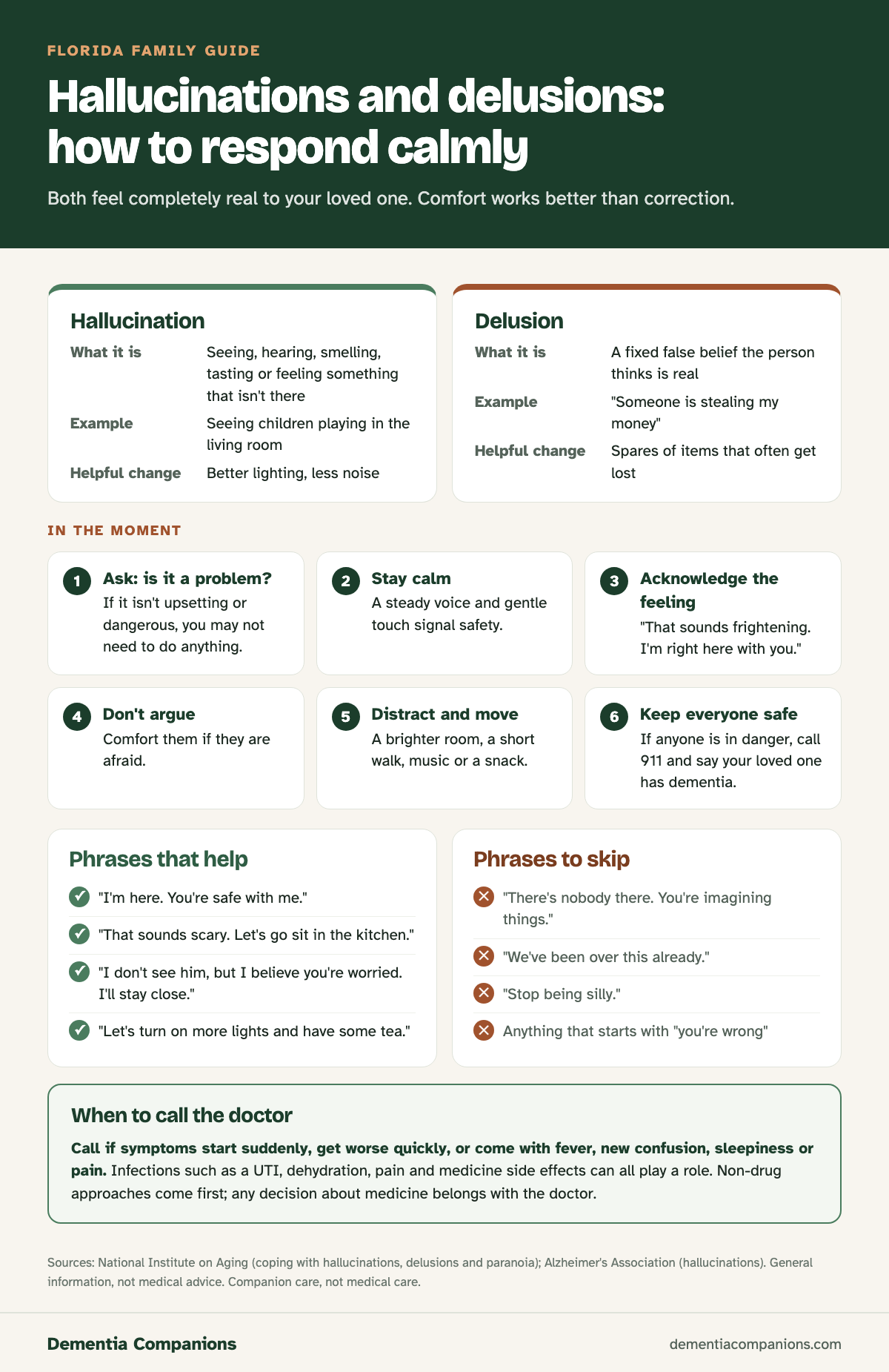
The National Institute on Aging explains that during a hallucination, a person sees, hears, smells, tastes or feels something that isn’t there, such as seeing their late mother in the room. Delusions are false beliefs the person thinks are real, such as believing a partner is unfaithful. Paranoia is a specific type of delusion involving suspicion. Read the NIA’s guide to coping with hallucinations, delusions and paranoia.
| Hallucination | Delusion | |
|---|---|---|
| What it is | A false sensory experience | A fixed false belief |
| Example | Seeing children playing in the living room | “Someone is stealing my money” |
| First response | Check if it is upsetting; comfort if so | Don’t argue; acknowledge the worry |
| Helpful change | Better lighting, less noise | Duplicates of often-lost items |
Both feel completely real to your loved one.
Why hallucinations and delusions in dementia happen
Dementia changes how the brain takes in and interprets the world.
A shadow can become an intruder. A reflection can become a stranger. A lost purse becomes proof of theft. The Alzheimer’s Association notes that hallucinations can come from the brain changes of the disease, and also from vision or hearing problems, medicines and physical problems such as kidney or bladder infections, dehydration and intense pain.
Lewy body dementia
Hallucinations can happen in any type of dementia, but they are a core feature of dementia with Lewy bodies. The Alzheimer’s Association describes recurrent, well-formed visual hallucinations in this condition, often early. It also warns that antipsychotic drugs must be used with extreme caution in Lewy body dementia because they can cause serious side effects. See our page on Lewy body dementia care.
Vision, hearing and light
Poor eyesight, cataracts and hearing loss can feed misperceptions. Our guides on vision and perception changes and hearing loss explain how to help.

How to respond in the moment
Debating what is real usually raises fear on both sides. Focus on how your loved one feels.
1. Ask: is it a problem?
The Alzheimer’s Association’s page on hallucinations suggests first deciding whether the hallucination is upsetting or dangerous. If your father is happily chatting with “the children in the garden,” you may not need to do anything.
2. Stay calm and reassuring
A steady voice and gentle touch signal safety. Speak slowly and keep your face relaxed.
3. Acknowledge the feeling
Try “That sounds frightening. I’m right here with you.” You can say frankly that you don’t see it, while accepting that they do.
4. Don’t argue
The NIA advises not arguing about what the person sees or hears, and comforting them if they are afraid.
5. Distract and move
Moving to another room, a brighter area or outside for a short walk often helps. Music, a snack or a simple task can shift attention.
6. Keep everyone safe
The NIA suggests making sure your loved one cannot reach anything they could use to hurt themselves or others. If anyone is in danger, call 911 and explain that your loved one has dementia.
Phrases that help, and phrases to skip
When you are startled, it helps to have words ready. These short phrases keep the focus on comfort.
- “I’m here. You’re safe with me.”
- “That sounds scary. Let’s go sit in the kitchen.”
- “I don’t see him, but I believe you’re worried. I’ll stay close.”
- “Let’s turn on more lights and have some tea.”
Try to skip phrases that argue or shame.
- “There’s nobody there. You’re imagining things.”
- “We’ve been over this already.”
- “Stop being silly.”
If a sentence starts with “you’re wrong,” it is usually better left unsaid. A warm tone matters more than perfect words.
Reducing triggers at home
Small changes to the environment can make a big difference.
- Turn on lamps before dusk so rooms stay evenly lit.
- Use sheer curtains to soften harsh Florida afternoon sun and glare.
- Cover or remove mirrors if your loved one sees “a stranger.”
- Turn off violent or upsetting TV programs, which can seem real.
- Reduce background noise from the TV, radio or air conditioner.
Keep frequently “lost” items in the same places, and keep spares.
Track patterns
Write down when episodes happen, what came before and what helped. Over time you may notice triggers such as fatigue, hunger, a certain time of day or a specific show. A printable care log makes this easy to share with the doctor.
Example: an evening in Tampa
This is an illustrative scenario, not a real family. A wife cares for her husband, who has Lewy body dementia. Around dusk he often says strangers are standing by the sliding glass door.
At first she insisted no one was there, and he grew angry. Now she says, “I don’t see them, but I can tell they’re bothering you. Let’s sit in the kitchen.” She turns on the kitchen lights, closes the vertical blinds before sunset and puts on his favorite jazz.
She keeps a notebook and notices the episodes are worse on days he naps late. She shares the notes with his neurologist, who reviews his medicines. The visitors still appear sometimes, but they rarely frighten him now.
When to call the doctor
Hallucinations and delusions can be part of dementia, but a sudden change is a signal to act. The Alzheimer’s Association recommends a medical evaluation for any new onset of hallucinations.
Call your loved one’s doctor if symptoms start suddenly, get worse quickly, or come with fever, new confusion, sleepiness or pain. Infections such as a urinary tract infection, dehydration, pain and medication side effects can all play a role. The NIA lists hallucinations among possible signs of dehydration, a real risk in the Florida heat. Our guide on infections and delirium explains warning signs.
Non-drug approaches come first. If medicine is considered, the doctor will weigh the risks carefully, because antipsychotics carry an increased risk of stroke and death in older adults with dementia. This article is general information, not medical advice.
Caring for yourself too
Responding to hallucinations and delusions day after day is draining, especially when the delusion is about you. If you are being accused of stealing, see our guide to coping with false accusations.
Step away when you need to, lean on family or a support group, and plan regular breaks. Dementia respite care gives you time to rest while a consistent companion stays with your loved one.
Frequently asked questions
Should I tell my loved one the hallucination isn’t real?
Arguing rarely helps. If it is not upsetting, you may not need to respond. If it is, comfort them and acknowledge the feeling. You can gently say you don’t see it while accepting that they do, then redirect.
What type of dementia causes hallucinations?
Hallucinations can happen in any type, but they are a core feature of dementia with Lewy bodies, where they often appear early. In Alzheimer’s disease they are more common in later stages.
Can a UTI cause hallucinations in older adults?
Physical problems such as bladder or kidney infections, dehydration and pain can trigger hallucinations. That is why any new or sudden hallucination should be checked by a doctor.
Are dementia hallucinations dangerous?
Many are harmless and even pleasant. They become a concern when they cause fear, agitation or risky behavior. Keep the home safe, remove dangerous items and call the doctor if symptoms are severe.
Why are hallucinations often worse in the evening?
Fading light creates shadows and reflections that are easy to misread, and tiredness late in the day makes confusion worse. Turning on lamps early, closing blinds before dusk and keeping the evening quiet can help. Our guide to sundowning has more evening strategies.
Still have questions?
Talk it through with us. A free call about your family's situation, with no obligation.
Call (689) 333-6079Send us a message- Screened for dementia care experience
- Florida ADRD training before the first visit
Conclusion
Hallucinations and delusions in dementia feel real to your loved one, so comfort works better than correction. Stay calm, acknowledge the feeling, adjust lighting and noise, and keep notes on patterns.
Tell the doctor about any new or sudden change, since infections, dehydration and medicines can play a part.
If you would like a calm, consistent companion at home, get 3 free caregiver profiles within 48 hours or call (689) 333-6079. Our dementia companion care is $35 an hour for 40+ hours a week, with no long-term contract.
Want a companion screened for dementia care experience?
We'll send 3-5 caregiver video profiles within 48 hours, so you can watch their video interviews before you decide. $35/hour for 40+ hours a week, no contracts.