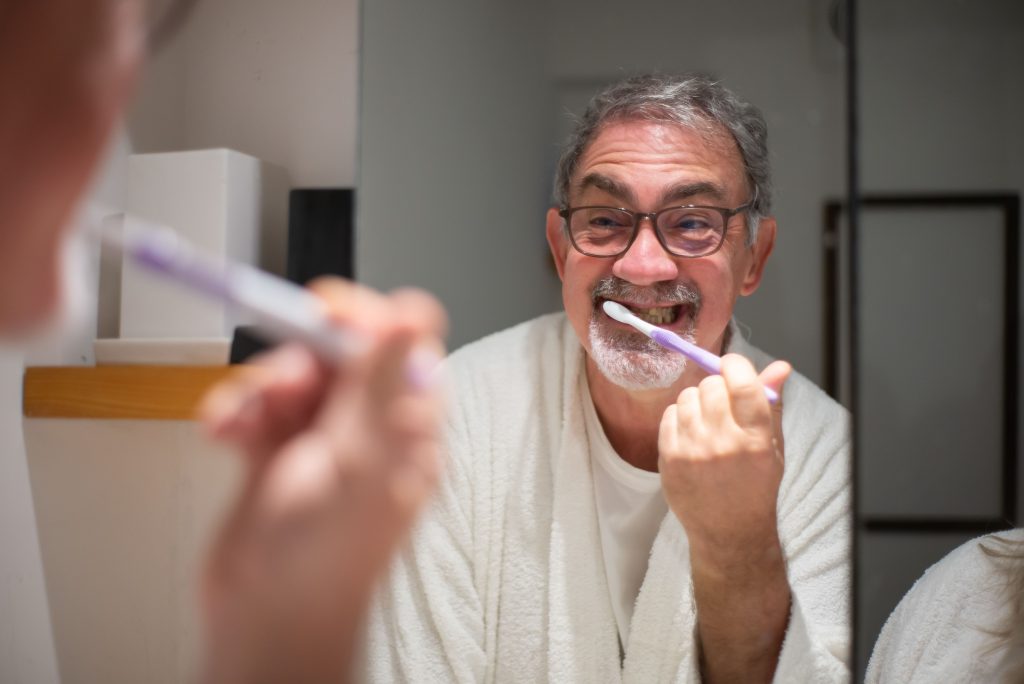
Oral Care for Dementia: Keeping Your Loved One’s Mouth Healthy
Oral care and dementia made easier: step-by-step brushing tips, denture care, dry mouth relief, signs of mouth pain and how to prepare for the dentist visit.
Read articleOur blog
Honest, practical articles written for the families and caregivers navigating a dementia diagnosis. No medical jargon, just clear, compassionate guidance from people who understand.
Oral care and dementia made easier: step-by-step brushing tips, denture care, dry mouth relief, signs of mouth pain and how to prepare for the dentist visit.
Read articleDoctor visits with dementia can go smoothly. Use our checklist to prepare, pick the best time, keep the waiting room calm and get clear answers.
Hallucinations and delusions in dementia can frighten everyone. Learn the causes, calm ways to respond, home changes that help and when to call the doctor.
Dementia and incontinence: why accidents happen, a simple bathroom schedule, Florida hydration tips, skin care and when to call the doctor about changes.
When a loved one with dementia becomes agitated or aggressive, stay safe and calm. Learn common triggers, what to say in the moment and how to prevent it.
Managing medications for a loved one with dementia: build a safe routine, use a pill organizer, handle refusals, store medicines in Florida heat and more.
Help a loved one with dementia eat and drink well: calm mealtime setups, finger foods, steady fluids in Florida heat and signs it is time to call the doctor.
Bathing and dementia: why your loved one resists bath time, how to set up a safe bathroom, gentle words that work, and when to call the doctor.
How to communicate with a loved one who has dementia when words get hard: calm phrases, nonverbal cues, a stage-by-stage table, and when to call the doctor.
What does a dementia companion do? Follow a typical visit hour by hour, see what companions do and do not do, and learn how Florida families use them.
Practical guidance for families and caregivers, delivered to your inbox when we publish. No spam, unsubscribe any time.
Tell us about your loved one. We send 3-5 matched caregiver video profiles within 48 hours. $35 an hour for 40+ hours a week, no contracts.


