Table of contents
Krystal D. Mize, PhD · Assistant Professor, Developmental Psychology
Florida Gulf Coast University · Fort Myers, Florida
Interviewed and Written by Ella Krane, Research and Interview Intern, University of Southern California
Interview: November 2, 2026
Introduction
A dementia diagnosis can leave families with questions that a medical label alone does not answer. What will everyday life look like? How much help is needed, and how can relatives offer support without taking over?
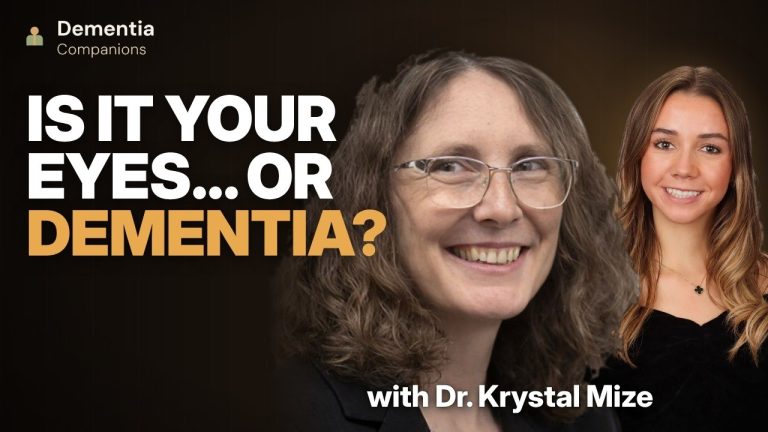
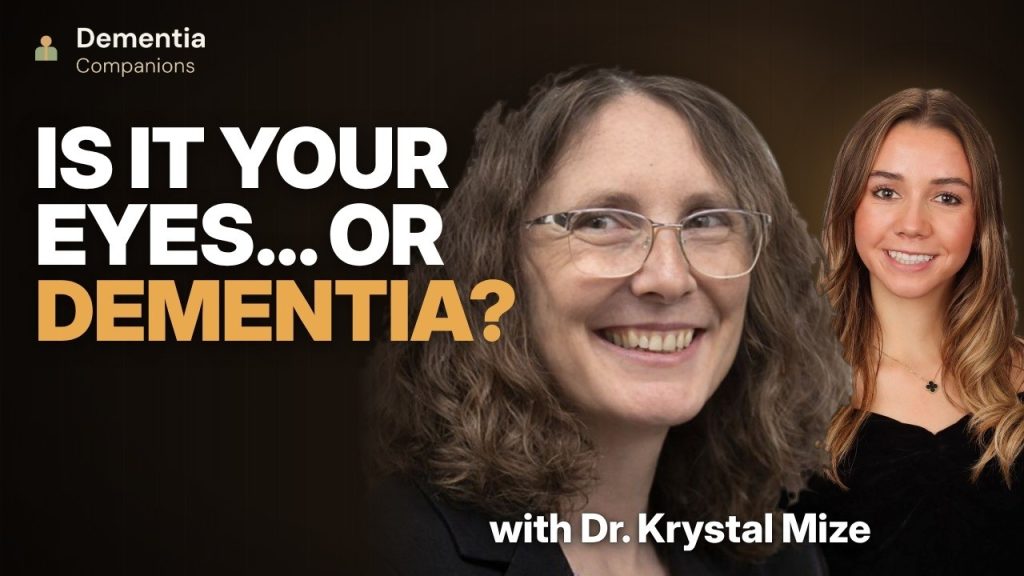
In this interview, Dr. Krystal Mize, a psychology professor at Florida Gulf Coast University, explains why dementia does not always begin with forgetting. Her research and educational outreach focus on posterior cortical atrophy, or PCA, a condition that affects how the brain processes visual information. Her message to families is to listen carefully, learn about the person’s particular challenges, and seek support early.
Key takeaways
- Dementia does not always begin with memory loss.
- Support should protect both safety and independence.
- Care partners need help that fits their circumstances.
Look beyond memory
Families often associate dementia with forgetting names or losing memories. Mize describes a different experience with PCA: difficulties involving visual and spatial information can appear while someone remains aware of what is happening and able to communicate. A person may seem capable in conversation but struggle with tasks that others take for granted.
“I look capable, but I do have these challenges,” says Mize. That gap between appearance and ability can make it harder for other people to understand what support is needed. Instructions that seem simple to one person may not be clear to someone whose brain processes space differently.
For families, the lesson is to pay attention to the actual difficulties rather than expect every dementia experience to follow the same pattern. Mize emphasizes understanding the symptoms and the accommodations that help. Being able to describe a change clearly can make conversations with professionals more useful than relying on assumptions about what dementia should look like.
Help without taking over
Good support is not simply doing everything for someone. Mize emphasizes giving people room to keep using abilities they still have, while recognizing that safety matters. Help should respond to what is difficult rather than erase opportunities to participate.
“Let me do whatever it may be for as long as I can safely,” she says. For a family at home, that means listening before deciding how much assistance to offer. Someone may need help with one part of daily life while remaining involved in other activities and decisions.
Mize also describes support as a shared effort. Relatives, friends, community resources, and professionals can play different roles, although not every family has the same network or access to help. She identifies increasing caregiver frustration and injuries as reasons to recognize that existing support may not be enough. Planning should be an ongoing conversation about changing needs, rather than a single decision made immediately after diagnosis.
Listen to care partners too
Caregiver wellbeing matters, but Mize cautions against assuming that everyone wants the same kind of break. Some care partners welcome time away and someone else stepping in. Others feel more anxious when they are separated from the person they love. Support that sounds helpful from the outside may not feel helpful to the person receiving it.
Her approach is to ask what the caregiver actually needs and to recognize limits honestly. Help may be needed during working hours, for everyday responsibilities, or when the caregiver feels stretched. The goal is not to judge how someone chooses to spend time with their loved one, but to make necessary support easier to request.
Families can carry that same listening approach into their wider support network. Instead of prescribing a particular version of self-care, they can make space for care partners to explain what feels manageable, what causes stress, and where another person could genuinely help.
Advice for families
Mize encourages families to approach concerns together. When something seems different, describe the specific changes and bring those observations into conversations with healthcare professionals. A loved one can help explain difficulties that might not be obvious during an appointment.
She also emphasizes learning about the diagnosis, finding community resources, and connecting with others who understand the experience. Families should not have to assume that appearing capable means having no support needs. Keep the person living with dementia involved, ask care partners what assistance would actually help, and recognize that needs can change. Her message is to seek understanding without losing sight of the individual, and be aware of early signs. “It’s when people don’t look demented that you can help them the most. They may have dementia, but they may not appear to be what we would call demented, and that’s when you can help them the most.”
About Dr. Mize
Krystal D. Mize, PhD, leads the Everything Lab at Florida Gulf Coast University. Her work includes PCA research, educational outreach, and peer support.
Watch the full interview
Watch the full interview with Dr. Mize
If your family needs help at home, Dementia Companions provides dementia-only companion care in Southwest Florida, Palm Beach, the Treasure Coast, and Miami and the Keys.
This article is general information, not medical advice. Please talk to your loved one’s doctor about their care.
Want a companion screened for dementia care experience?
We'll send 3 caregiver video profiles within 48 hours, so you can watch their video interviews before you decide. $35 an hour, minimum 25 hours a week, no long-term contract. Stop anytime with 7 days’ notice.