What is wandering?
Why people with dementia leave or get lost, and what Florida families can do before and during an emergency.
Wandering in dementia means a person walks or drives away, becomes lost, or tries to leave a safe place, often searching for a “home,” a job or a person from the past. The Alzheimer’s Association says six in 10 people living with dementia will wander at least once, and many do so repeatedly.
What it looks like day to day
It rarely starts with a dramatic disappearance.
First your loved one comes back late from a walk, or gets turned around in the supermarket parking lot. They may pace, check the doors, pack a bag “to go home,” or say they need to pick up the children from school. The Alzheimer’s Association lists these as warning signs, along with anxiety in crowded places and trouble finding familiar rooms.
Why it happens
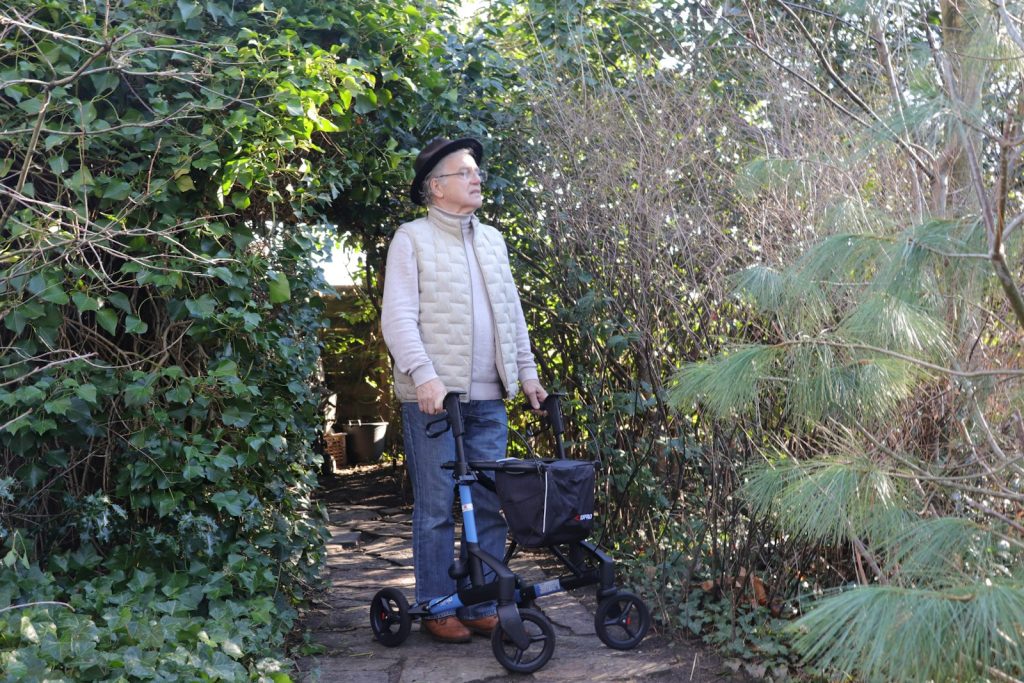
Wandering usually has a purpose that makes sense to your loved one: an old routine (going to work), an unmet need (bathroom, hunger, pain), restlessness, boredom, or fear in a confusing setting. It is common in the late afternoon with sundowning. Memory loss and trouble judging space and direction then turn a short walk into getting lost.
Lowering the risk at home
- Plan activity and a walk at the time of day wandering usually happens.
- Meet basic needs: bathroom trips, snacks, water.
- Add door chimes or alarms and night lights; consider covering or camouflaging exit doors. Never lock someone in alone.
- Remove car keys if your loved one no longer drives. Our post on giving up the keys can help.
- Keep a recent close-up photo and a list of places they might head for.
- In Florida, note nearby water: canals, retention ponds, pools and lakes are serious hazards.
More ways to make the house safer
The Alzheimer’s Association suggests a few extra steps that cost little:
- Deadbolts placed high or low, out of sight
- A black mat or painted strip about two feet deep in front of a door, which some people avoid crossing
- Pressure-sensitive mats by the bed or door that sound an alert
- Coats, hats, purses and keys kept out of view
- Labels or pictures on bathroom and bedroom doors
It also advises never leaving your loved one alone in a car. None of these guarantees safety, so pair them with supervision at the riskiest times.
If your loved one goes missing
- Search right away. The Alzheimer’s Association notes many people are found within 1.5 miles of where they disappeared; check brush, fence lines and water edges.
- Call 911 within 15 minutes if they are not found, and say the person has dementia.
- Ask about a Silver Alert. Under FDLE criteria, local law enforcement can issue a Local Silver Alert for a person 60 or older with verified dementia missing on foot, or request a State Silver Alert with highway signs if a vehicle is involved. Only law enforcement can request it.
Our full Florida wandering and elopement guide has a printable plan.
Florida Silver Alert basics
Florida created the Silver Alert by executive order in 2008, and lawmakers put it into statute in 2011. According to FDLE, the agency issuing a local alert sets its radius and it generally stays active until the person is found, while highway signs for a State Silver Alert run for up to six hours. Families start by calling the local law enforcement agency where the person was last seen; FDLE’s missing persons clearinghouse is at 1-888-356-4774.
Build a wandering kit today
- A recent close-up photo, printed and on your phone
- Height, weight, and what they usually wear
- Which hand is dominant; wandering often heads that way
- Past homes, workplaces, churches and favorite stores
- Medical conditions and medicines
- Phone numbers of neighbors who agreed to call you
Keep a copy with the hospital information sheet so you are not searching for details in a crisis.
When to call the doctor
Tell the doctor when wandering starts or increases. Pain, constipation, medication side effects, poor sleep or an infection can drive restlessness, and treating them may help.
Wandering vs. pacing
Pacing inside a safe space can be a healthy way to move and self-soothe. Wandering becomes dangerous when it leads to leaving safety, getting lost or entering hazards. The goal is not to stop all movement but to make movement safe.
Supervision that fits your family
Families often schedule a companion for the hours when wandering risk peaks, with walks built in. If your loved one lives alone, our living-alone guide explains when that stops being safe, and in-home care vs. memory care covers the next steps.
Related terms
Cover the restless hours
A consistent companion for walks and supervision when wandering risk is highest. 3-5 profiles in 48 hours, $35/hour for 40+ hours a week.
Frequently asked questions
Still have questions?
Talk it through with us. A free call about your family's situation, with no obligation.
Call (689) 333-6079Send us a message- Screened for dementia care experience
- Florida ADRD training before the first visit
How common is wandering in dementia?
The Alzheimer’s Association says six in 10 people living with dementia will wander at least once.
What is a Silver Alert in Florida?
A law enforcement alert for missing older adults with dementia or a similar irreversible condition. Local alerts cover people on foot; State alerts with highway signs require a verified vehicle. Call 911 first.
How quickly should I call 911 if my loved one is missing?
The Alzheimer’s Association advises calling 911 if the person is not found within 15 minutes, and telling dispatchers the person has dementia.
Should I lock the doors to stop wandering?
Alarms, chimes and camouflaged doors are safer options. Never lock a person with dementia in alone, because of fire and emergency risk.
What causes wandering in dementia?
Wandering usually has a purpose that makes sense to your loved one: an old routine such as going to work, an unmet need like the bathroom, hunger or pain, restlessness, boredom, or fear in a confusing setting. It is common in the late afternoon with sundowning. Memory loss and trouble judging space and direction then turn a short walk into getting lost. Pain, constipation, medication side effects, poor sleep or an infection can also drive restlessness, so tell the doctor when wandering starts or increases.
Don't see your question? Call (689) 333-6079 or send us a message.