Private caregiver vs. agency in Florida
Private caregiver vs agency: what you take on when you hire directly, what an agency or registry really provides, and how Florida law treats each.
Hiring a private caregiver can cost less per hour, but in Florida you take on the background check, household employer taxes (Schedule H once you pay $3,000 in 2026), state reemployment tax, injury risk and backup coverage. An agency or registered provider costs more but must Level 2 screen and dementia-train staff and replace absent caregivers.
Three ways to hire help in Florida, not two
When families say “private caregiver vs. agency,” they are usually comparing three different arrangements, and Florida law treats each one differently:
Direct hire: you find, hire, pay and manage the caregiver yourself. Under s. 400.464, an individual acting alone, not affiliated with an agency or registry, is exempt from home health agency licensure.
Nurse registry: a licensed registry refers a caregiver to you. Under s. 400.506, that caregiver is an independent contractor, not the registry’s employee, and the registry must tell you it cannot monitor, supervise, manage or train them.
Agency or registered companion provider: the provider employs the caregiver, schedules, supervises and replaces them. Home health agencies are licensed by AHCA; companion/homemaker providers register with AHCA under s. 400.509.
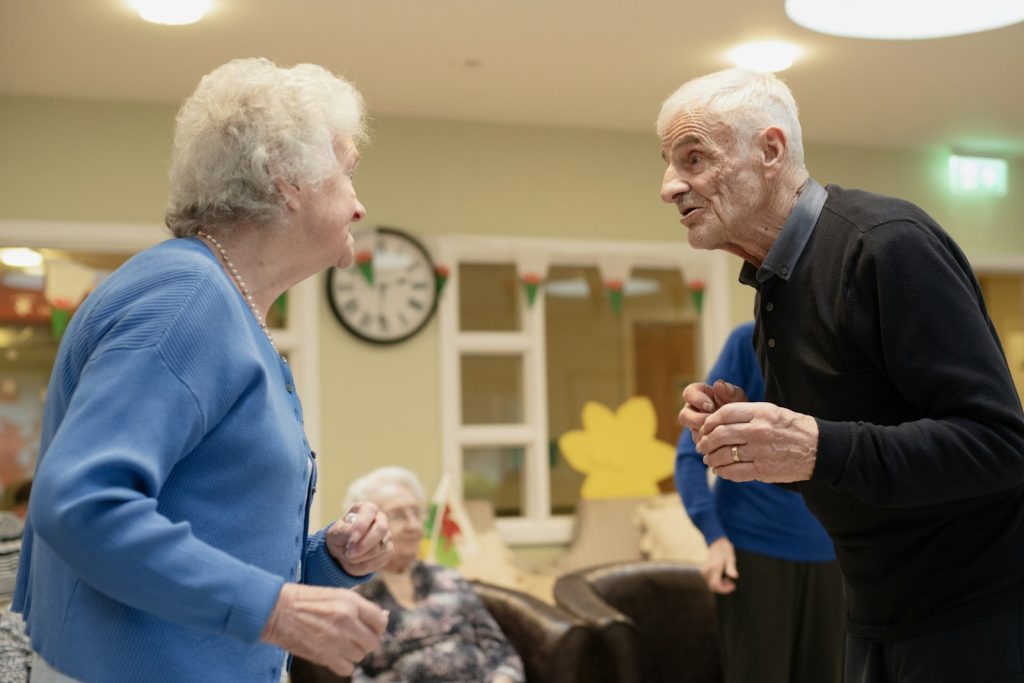
Side-by-side: private caregiver vs. agency in Florida
| Private (direct) hire | Agency or registered provider | |
|---|---|---|
Hourly cost | Usually below agency rates, because there’s no overhead. Your real cost is the wage plus employer taxes and any insurance. | Florida median for non-medical home help about $32/hr in 2025 (CareScout). Dementia Companions: $35/hour for 40+ hours a week. |
Background screening | Up to you. Florida’s Level 2 screening requirement applies to agencies, registries and registered providers, not to families hiring on their own. | Level 2 background screening required for employees or contractors (s. 400.512). |
Dementia training | Up to you. | Required under s. 430.5025: basic information at hire, a 1-hour state course within 30 days, and 2 more hours within 7 months for in-home personal care staff. |
Taxes and payroll | You are likely a household employer (see below). | The agency is the employer; it handles payroll and taxes. With a registry, ask in writing who the employer is. |
Injury and liability | Florida’s workers’ compensation law excludes domestic servants in private homes from its definition of employment (s. 440.02), so check with your homeowner’s insurer about injury coverage. | Ask for proof of the agency’s liability and workers’ compensation coverage. |
Backup coverage | None unless you arrange it. If your caregiver is sick or quits, you are the backup. | Provider sends a replacement; ask how fast. |
Supervision | You. | Agency supervises; care-plan reviews vary by provider. |
Consistency | Often excellent, with one person you chose. | Varies widely. Ask whether you’ll have one regular caregiver. |
Taxes: what Florida families need to know
If you control what the caregiver does and how they do it, the IRS generally treats them as your household employee, not a contractor. According to IRS Topic 756 and Publication 926:
If you pay one household employee $3,000 or more in cash wages in 2026, you generally must withhold 7.65% (6.2% Social Security plus 1.45% Medicare) and pay a matching 7.65% yourself.
If you pay household wages of $1,000 or more in any calendar quarter of this year or last, federal unemployment tax (FUTA) applies to the first $7,000 per employee.
You report these on Schedule H with your Form 1040, and you need an employer identification number to issue a Form W-2.
If an agency provides the worker and controls what work is done and how, the worker is not your employee.
Wages paid to your spouse, your child under 21, or (in most cases) your parent don’t count for these taxes.
Florida adds its own layer. The Florida Department of Revenue says a household employer who pays $1,000 or more in a calendar quarter is liable for state reemployment tax. Talk with a tax professional before you start paying anyone directly; back taxes and penalties are a common, avoidable surprise.
If you hire directly, do these five things
Check references and run a background check before the first shift.
Write down duties, hours, pay, and what the caregiver must never do (for example, sign checks or give medications).
Set up payroll or a household payroll service, and register for Florida reemployment tax if you’ll cross the threshold.
Call your homeowner’s insurer about injury coverage for a household worker.
Line up a backup, whether a relative or an agency, before you need one.
Who each option is for
Private hire
Direct hire works when you already know and trust someone, such as a neighbor or a former aide from a parent’s ALF, and you are willing to run payroll, check references, handle insurance questions and step in when they can’t come. It can save money on long schedules.
Best for: families with a trusted candidate, steady long hours, a nearby relative who can cover gaps, and the time to manage an employee.
Agency or registered provider
An agency suits families who live far away, work full-time, or simply can’t add employer duties to caregiving. You pay more per hour for screening, training, payroll, supervision and backup.
Best for: long-distance families, first-time caregivers, anyone without a backup plan, and loved ones whose safety depends on coverage never lapsing.
Private caregiver vs agency: our pick by scenario
You live out of state: agency. A direct hire with no backup is risky when you can’t drive over on a sick day. See help for long-distance families.
A trusted family friend wants to help 15 hours a week: direct hire can work. Set up payroll properly, put duties in writing, and line up an agency for backup days.
A nurse registry offered a caregiver: ask in writing who the employer is for tax purposes and who supervises. Under Florida law the registry cannot supervise the caregiver.
Your loved one has moderate dementia with wandering: agency or registered provider. Missed shifts are a safety issue, not an inconvenience.
Warning signs the current arrangement isn’t working
Missed or late shifts with no replacement.
Unexplained spending, missing items or new “friends” around your loved one; our financial exploitation guide explains what to watch for.
You can’t get a clear answer about what happened during the day.
Your loved one seems afraid of or withdrawn around the caregiver.
Care needs have grown beyond companion tasks (lifting, wound care, overnight safety).
How families combine them
A common Florida setup is one privately hired caregiver for the main weekday hours plus an agency for weekends, vacations and sick days. Another is an agency companion for a few months while the family learns what good dementia care looks like, then a direct hire once they know what to ask for. Our guide to choosing a dementia caregiver in Florida has interview questions for either route.
Where Dementia Companions fits, and where it doesn’t
We are a provider, so the screening, payroll and backup sit with us. Every companion is screened for dementia care experience, we send 3-5 matched video profiles within 48 hours so you can watch their interviews before you decide, and if the fit is wrong we rematch at no cost. The rate is $35 an hour for 40+ hours a week, no contract; call us about shorter schedules. We are not the cheapest option per hour, and we don’t provide nursing. We do arrange live-in companion care from $375 a day. Learn more on how it works.
Our companions don’t provide hands-on personal care such as bathing or toileting. If your loved one needs it, add a licensed home health agency or aide, and our companion can work alongside them.
Want the screening and backup handled for you?
Tell us about your loved one and we’ll send 3-5 matched companion profiles within 48 hours, each screened for dementia care experience.
Frequently asked questions
Still have questions?
Talk it through with us. A free call about your family's situation, with no obligation.
Call (689) 333-6079Send us a message- Screened for dementia care experience
- Florida ADRD training before the first visit
Do I have to pay taxes if I hire a caregiver directly?
Usually, if they are your household employee. For 2026, paying one household employee $3,000 or more in cash wages generally triggers Social Security and Medicare taxes, reported on Schedule H. Florida reemployment tax applies once you pay $1,000 in a calendar quarter. Ask a tax professional.
Are private caregivers in Florida background checked?
Not automatically. Florida’s Level 2 screening requirement applies to home health agencies, nurse registries and registered companion/homemaker providers. If you hire directly, any background check is up to you.
What's the difference between a nurse registry and an agency?
A Florida nurse registry refers independent contractors and, by law, cannot monitor, supervise, manage or train them. An agency employs and supervises its caregivers.
Do I need workers' compensation for a household caregiver in Florida?
Florida’s workers’ compensation law excludes domestic servants in private homes from its definition of employment. You may still be liable for injuries, so ask your homeowner’s insurer and an attorney.
Is a private caregiver cheaper than an agency?
Usually per hour, before taxes, insurance and backup. Florida’s 2025 median for non-medical in-home help was about $32 an hour according to CareScout.
Don't see your question? Call (689) 333-6079 or send us a message.
Sources
- Florida Statutes s. 400.464, home health agency licensure
- Florida Statutes s. 400.506, Nurse registries
- Florida Statutes s. 400.509, companion and homemaker registration
- Florida Statutes s. 400.512, personnel screening
- Florida Statutes s. 430.5025, Dementia training for covered providers
- Florida Statutes s. 440.02, Workers' compensation definitions
- IRS Topic No. 756, Employment taxes for household employees
- IRS Publication 926, Household Employer's Tax Guide
- Florida Department of Revenue, Reemployment Tax tutorial
- CareScout, 2025 Cost of Care Survey: Florida results