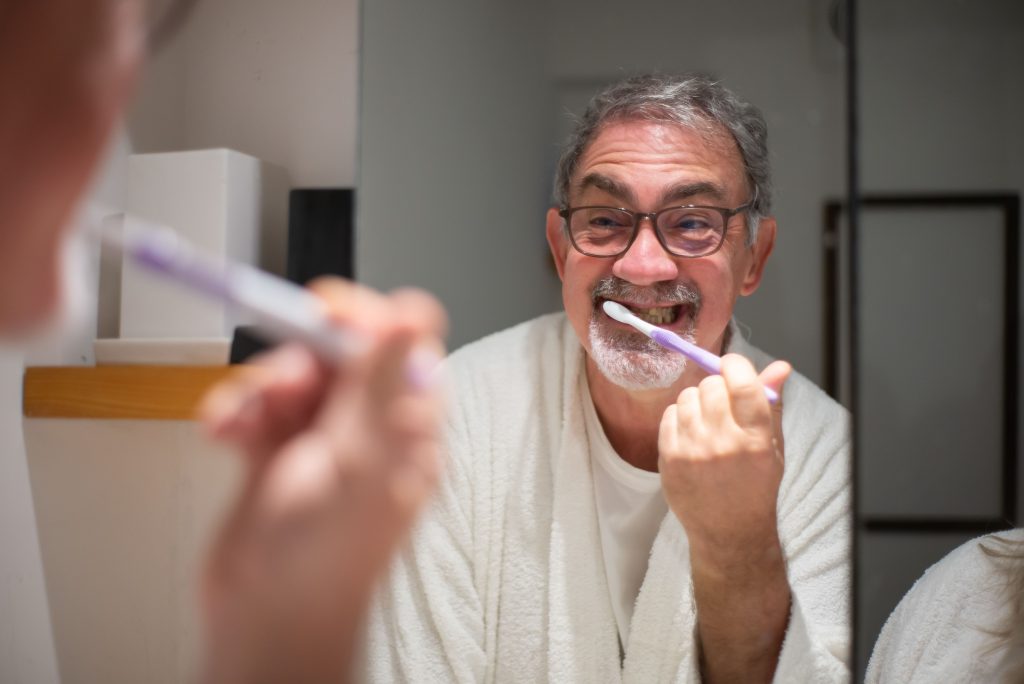
When you’re caring for a loved one with dementia, oral care can quietly slip to the bottom of a very long list. Between meals, medications, and daily routines, brushing teeth may feel like a small thing — until a toothache, mouth sore, or infection makes an already hard day much harder. The good news is that with a little patience and the right approach, keeping your loved one’s mouth clean and comfortable is very achievable, and it can make a real difference in how they eat, speak, and feel each day.
Why Oral Care Matters More Than You Might Think
Good oral care is about far more than a bright smile. A healthy mouth helps your loved one chew and enjoy food, stay nourished, and avoid the pain of cavities, gum disease, and mouth infections. When teeth hurt, many people with dementia can’t tell you what’s wrong — instead, the discomfort may show up as refusing to eat, pulling at the face, new agitation, or trouble sleeping. Because dementia can make it hard to recognize or express pain, a sore mouth is easy to miss.
Dry mouth is another common issue, often made worse by medications that are frequently part of dementia care. In Florida, where air conditioning runs much of the year and dehydration is a constant concern, a dry mouth can become uncomfortable quickly. Saliva helps protect teeth and gums, so when it’s reduced, the risk of decay and irritation goes up.
Making Daily Brushing Easier
The daily routine doesn’t have to be a battle. Small adjustments to how and when you offer care can lower stress for both of you. Aim to brush twice a day, ideally at the times of day when your loved one is calmest and most cooperative — for many people, that’s the morning.
- Keep it consistent: brush at the same times and in the same place each day so the routine feels familiar and predictable.
- Use a soft-bristled toothbrush and a small amount of fluoride toothpaste; a child-sized brush can be gentler and easier to manage.
- Demonstrate by brushing your own teeth at the same time — mirroring often works better than instructions.
- Break it into short steps and use simple, one-at-a-time cues like “open,” “brush,” and “rinse.”
- Try handing the brush to your loved one first; if they can still brush with guidance, let them keep that independence.
- Stand slightly to the side rather than directly in front, which can feel less confrontational.
If your loved one resists having their mouth touched, don’t force it in the moment. Step back, try again a little later, or switch to a calmer time of day. A relaxed, unhurried tone does more than any perfect technique.
Caring for Dentures and Managing Dry Mouth
If your loved one wears dentures, clean them daily and check that they still fit well — weight changes and gum shrinkage over time can make dentures loose, leading to sores or difficulty eating. Remove and rinse them after meals when possible, brush them gently with a denture cleaner rather than regular toothpaste, and take them out at night to give the gums a rest. Label the denture case, especially if your loved one spends time in respite or facility care, so they don’t get misplaced.
To ease dry mouth, offer frequent sips of water throughout the day, keep the lips moisturized, and ask the dentist or pharmacist about saliva substitutes or alcohol-free mouth rinses. Sugar-free options can help stimulate saliva without adding to decay risk. Keeping the room comfortably humid can also help during long stretches of air conditioning.
Watching for Problems and Seeing the Dentist
Because your loved one may not be able to describe discomfort, it helps to gently look inside their mouth now and then. Watch for red or swollen gums, sores or white patches, bad breath that won’t go away, broken or loose teeth, or any new reluctance to eat. Sudden changes in behavior, like face-rubbing or refusing certain foods, can also be signals worth checking.
Try to keep up with regular dental visits, and let the dental office know about the dementia diagnosis in advance so they can plan for a shorter, calmer appointment. Booking early in the day, keeping the visit brief, and bringing a familiar item can all make the experience smoother. Many Florida communities have dentists experienced with older adults and memory conditions, and some offer in-home or mobile visits if travel is too stressful.
You’re Doing More Than You Realize
Every small act of care — a gentle brushing, a sip of water, a quick check of the gums — adds up to real comfort and dignity for your loved one. If daily routines like oral care are becoming overwhelming, you don’t have to manage everything alone. A trained companion can help make these moments calmer and more consistent, giving you room to breathe. To learn how compassionate in-home support can lighten your day, reach out to Dementia Companions.
This article is for general information and support and is not a substitute for medical advice. Please consult your loved one’s healthcare provider for guidance specific to their situation.


