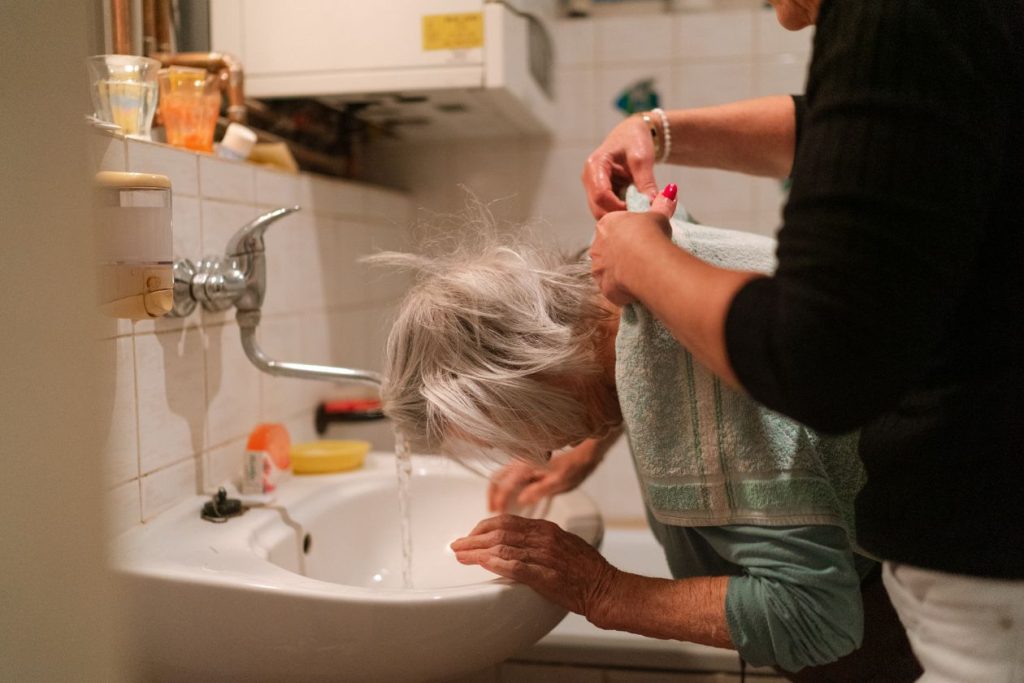
Few parts of dementia caregiving feel as delicate as helping a loved one with toileting and incontinence. It can be uncomfortable for both of you, and it often arrives quietly—an occasional accident that slowly becomes a regular part of your day. If you are navigating this now, please know you are not alone, and there is nothing shameful about it. Incontinence is a common part of the dementia journey, and with a few practical adjustments you can protect your loved one’s dignity while making daily life calmer for everyone.
Why Incontinence Happens with Dementia
Incontinence in dementia is rarely just a bladder or bowel problem. As the disease progresses, your loved one may no longer recognize the urge to go, forget where the bathroom is, struggle to undo clothing in time, or be unable to tell you what they need. Sometimes an accident is really a communication problem in disguise. Other times it points to something treatable, such as a urinary tract infection, constipation, or a medication side effect. Because a sudden change in continence—or a jump in confusion—can signal a UTI, it is always worth mentioning new or worsening symptoms to your loved one’s healthcare provider before assuming it is simply the dementia advancing.
Building a Gentle Bathroom Routine
Many families find that a predictable schedule prevents far more accidents than waiting for their loved one to ask. Try guiding them to the bathroom at regular intervals—often every two to three hours, and always first thing in the morning, before and after meals, and before bed. Watch for personal signals that they need to go, such as fidgeting, pacing, tugging at clothing, or sudden restlessness. Responding to these cues early can turn a potential accident into a success.
- Keep the path to the bathroom clear, well lit, and easy to see, especially at night.
- Put a contrasting-colored toilet seat or a simple sign on the door to help your loved one find and recognize the toilet.
- Choose clothing that is easy to manage, like elastic waistbands instead of buttons, zippers, or belts.
- Offer calm, step-by-step cues rather than a string of questions—”Let’s use the bathroom now” is easier to follow than “Do you need to go?”
- Limit drinks with caffeine, which can irritate the bladder, but never restrict overall fluids.
A Special Note on Hydration in Florida
It can be tempting to cut back on fluids to reduce accidents, but this is one of the most common mistakes—and in Florida’s heat it can be dangerous. Dehydration raises the risk of UTIs, constipation, dizziness, and worsening confusion. Instead of limiting water, offer small drinks steadily throughout the day and taper the amount in the couple of hours before bedtime to ease nighttime trips. Water-rich foods like watermelon, oranges, and cucumber can help, too, especially during our long, hot summers.
Protecting Dignity and Managing Accidents
How you respond to an accident matters as much as the routine itself. Your loved one may feel embarrassed or frightened even if they cannot express it, so a warm, matter-of-fact tone goes a long way. Avoid words like “diaper,” which can feel infantilizing; “underwear” or “briefs” preserves dignity. Keep the moment brief and reassuring, and never scold—accidents are the disease, not a choice.
- Stock up on absorbent briefs, waterproof mattress pads, and disposable bed pads so cleanup is quick and low-stress.
- Keep a small kit of wipes, gloves, a change of clothes, and bags in the car and by the bed.
- Protect the skin by cleaning gently, drying thoroughly, and applying a barrier cream to prevent irritation and breakdown.
- Handle soiled clothing and cleanup calmly and privately, offering simple reassurance: “It’s okay, we’ll get you comfortable.”
When to Ask for Help
Toileting and incontinence care is physically and emotionally demanding, and it often becomes one of the tipping points where families realize they cannot do it all alone. If you are losing sleep, feeling overwhelmed, or worried about safely helping your loved one in the bathroom, that is a completely reasonable time to bring in support—whether from other family members, your loved one’s care team, or a trained in-home companion.
At Dementia Companions, our companions provide warm, patient companionship and can offer gentle encouragement around toileting routines and hygiene habits, always with discretion and genuine respect for your loved one’s dignity. Hands-on personal care, such as physically assisting with toileting, falls outside our companions’ scope, but we are always glad to talk through what support might look like for your family, including how our service can work alongside other personal care support if needed.
This article is for general information and support and is not a substitute for medical advice. Please consult your loved one’s healthcare provider for guidance specific to their situation.


